
The architects of chaos. How do women backstage at the PFF save the celebration of cinema before a catastrophe happens?

Nina Gosławska
Flashes, impeccably tailored suits on the red carpet, screening rooms filled with viewers that there is not a single seat left, and rounds and rounds of applause after a special screening - this is the facade of the festival, spotted by cameras and admired by viewers. But the true heart of the Polish Film Festival beats a few metres away. Behind the closed doors of the Musical Theatre and Gdynia Film Centre, there is no time for correcting evening make-ups. Instead of heels tapping, one can hear a constant burr of keyboards and ringing phones.
When in Warszawa screening room lights turn off, we see a grand cinema and artistry of a director that in a few days someone will win the Golden Lions for. Rarely do we think about the great logistic machine put in action by mostly women - directors, coordinators, spokespersons and managers of voluntary service. They manage hundreds of coworkers, neutralising crises and putting out fires breaking out just minutes before a screening starts.
How does the festival really look from the perspective of the centre of chaos, when procedures fail and what remains are only instinct, calmness and mutual solidarity?
Zuzanna Sitek: To harness the element and a human.
“The festival is such a dynamic organism that fires break out here in a split second, from the least expected side”, says Zuzanna Sitek, who a year ago celebrated her decennary during the jubilee festival. She started as a volunteer but now works in the department of marketing and promotion.
“We have guests who get irritated by delays or press photographers who thrust the barriers in order to have the best spot for the ceremony, even though the safety procedures are the same every year. Then, the only effective weapon is calmness. You have to defuse their emotions with composure and solid arguments”, says Zuzanna.
However, not only people are unpredictable. Zuzanna is responsible for stage design assembly, including a vital event backdrop on the red carpet, which is installed on Friday evening and has to withstand fickle, coastal aura.
“Once boards were hung on a fence by Mercure Hotel and they were blown off by a night gale. Engineers had to catch them literally across the whole street. Since then, we don’t have these boards. This year, just before the opening, a cloudburst happened. The backdrop began to sway threateningly. On Sunday afternoon I immediately called for the crew, knowing that installation of such a backdrop isn’t easy considering Gdynia’s weather. Sometimes it’s easier to control the storm than a person thrown off-balance but our role is to make everything look impeccably in the frame”, tells Zuzanna.”
Karolina Zduńczyk: A room on the second floor and a heart of the festival
The festival management office is a command headquarters and also a place where an annual, mathematical miracle happens. Karolina Zduńczyk has started as a volunteer but since 11 years, she has an apparently impossible task: how to fit over five thousand guests on 1070 seats?
“We work on huge, draw up cards of an audience plan, with every seat marked for a specific person. It's manual work under constant time pressure”, says Karolina.
“Hours before the ceremony are very intensive and the situation can change literally up to the last second. Someone suddenly leaves, someone unannounced comes to Gdynia. We have our iconic phrase “to be rubbed out”. We rub out one name, write down another, move whole rows. We are in constant contact with girls from the first and second reception, and the phone is burning from the always changing information.”
The fever hits the high spot at night, between Friday and Saturday, just before the Closing Ceremony:
“Someone once called our room on the second floor,where we have invitations for the ceremony and banquet, the heart of the festival. On Friday night, we are accompanied by girls from film crews and Polish guests office departments. Friends bring us food because they know that we won’t be finished with checking the lists by 2 a.m. or even 4. a.m. - just to be back at 9 a.m. to continue our work. Changes occur up to the last minutes. Hierarchy disappears, we support one another. I remember when the former Director Leszek Kopeć came to us in the middle of the night, sat down and together with us sorted the envelopes alphabetically. This feeling of community keeps us on our feet, especially when later we have to calmly inform someone why there isn’t a seat available for them.
Sandra Czerwińska: The currency of sincerity
Without over two hundred volunteers, the festival would stop working after a few minutes. Coordinating such a big group requires not only a logistic talent but first and foremost stress resistance.
“We work with people for many months and then when the day of issuing accreditations happens, someone is missing,” explains Sandra Czerwińska. “I call them, ask what happened, and all I hear is: Well, I have resigned, I thought you knew because I stopped answering your emails. But that causes holes in our schedule that need to be filled up. With two hundred people on board there is no time nor place to guess. Until I get a withdrawal on paper, the person exists in the schedule.”
Sandra’s most important rule? No lying.
“Once a boy was terribly late for his shift in Helios cinema. I call him and hear a coarse, tired voice - I’m tired - he says. I ask without beating about the bush - Are you really ill, like for the whole week and I have to look for a replacement, or you just have a hangover? A moment of silence. - Yes, I have a hangover. I answered him shortly: I appreciate your sincerity. Get well and come back tomorrow morning. - We are just human beings. If I have clear information, I will immediately fill up the hole in the schedule. SIlence is the worst.”
Klaudia Dzierugo: The frontline of press battlefront.
For Klaudia, who started as a volunteer in the festival newspaper and now works in the press office of the festival, this event is a never-ending run with microphones, bottles of water and name lists, changing at a blistering pace.
“Before every press conference, the information about who from the cast and crew will actually sit behind the conference table is crucial. The moderator's preparation and camera operators' work depends on it. The names often change minutes before going live, says Klaudia.”
The true test came right at the beginning of this year’s edition.
“The opening film Wild, Wild East caused huge media attention. The screening room was full and after the conference, the corridor leading to the press office transformed into a swirl of cameras, microphones and reporters catching cast members as they went by. It lasted several dozen minutes in an incredible squeeze. Our role is to take care of details in this swirl - microphones, camera framing, water for guests, filmmakers’ comfort and journalists’ work. Everything has to look professional, regardless of the heart behind the frame.”
When the lights go off and the doors are closed, rarely do they have a time to celebrate. They read next emails, sort accreditations, rub out names from the audience plan, answer and make calls. The festival in Gdynia is a celebration of Polish cinema only because them - the Architects of Chaos - take care every day that this elaborate house of cards wouldn’t fall into pieces right in front of the audience's eyes.
-
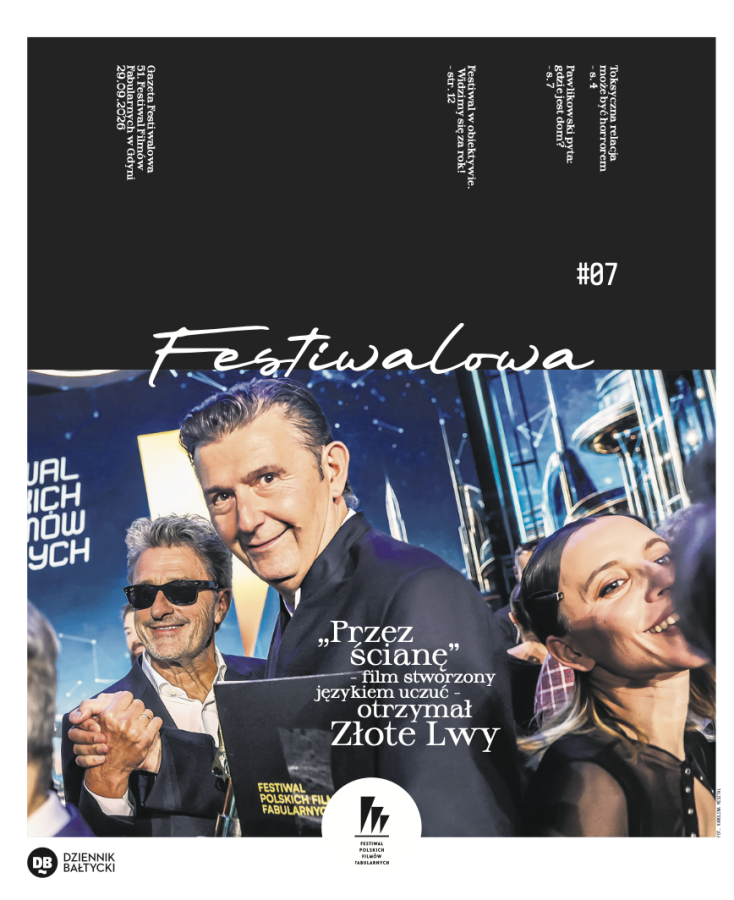 Gazeta Festiwalowa numer 7
 -
 Październikowe odsłony „50 na 51”
 -
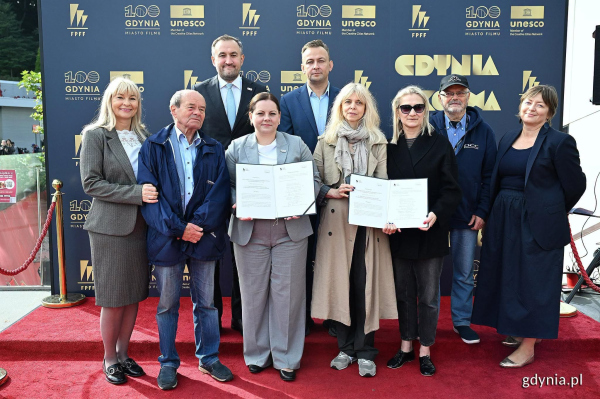 Srebrny Festiwal. FPFF dla osób starszych
 -
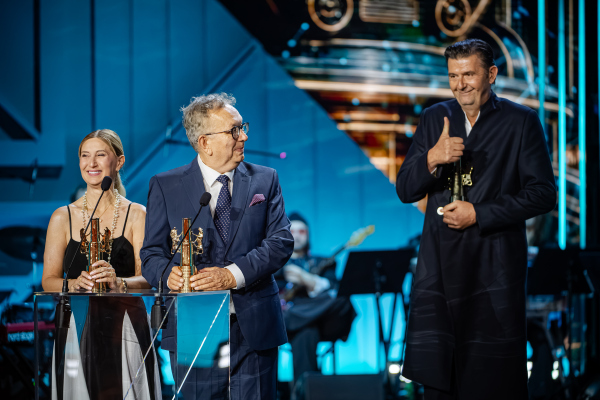 Closing Gala of the 51st Polish Film Festival – photo report
 -
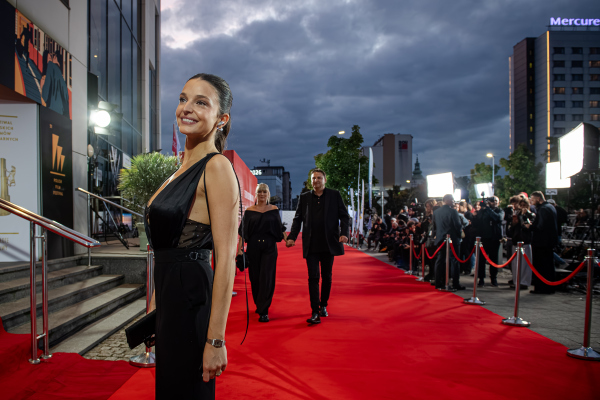 RED CARPET – photo report
 -
 Day six of the 51st PFF – photo report
 -
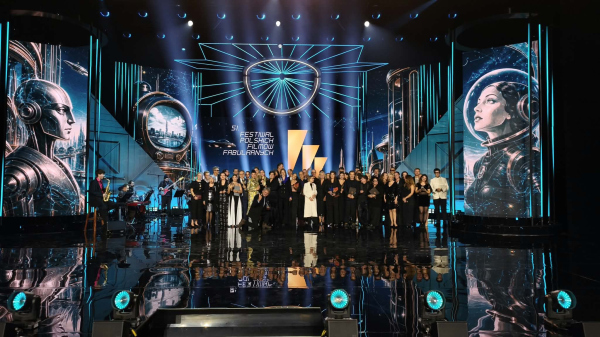 WINNERS OF THE 51ST PFF
 -
 What’s in store for today? SATURDAY
 -
 Festival Newspaper No 6
 -
 51st PFF Newsreel - Episode 5
 -
 Horror lies underneath
 -
 The Apostles of Rock’n’Roll.
 -
 Notions of Intertextuality in the Cinema of Krzysztof Kieślowski
 -
 YOUNG GALA – photo report
 -
 Day five of the 51st PFF – a photo report on festival life and accompanying...
 -
 Day five of the 51st PFF – photo report


