

FIPRESCI & Polish Film Festival Joint Publication on Krzysztof Kieślowski
The year 2026 marks the 30th anniversary of the great Polish director’s passing, and to honour his enduring artistic influence, FIPRESCI & Polish Film Festival prepared a special collection of seven essays written by international film critics associated with FIPRESCI. The publication aims to reflect on Kieślowski’s cinema and its continuing relevance for contemporary audiences, filmmakers, and critics around the world.
Steven Yates
UK
The Bulgarian-French philosopher and literary critic Julia Kristeva developed the term "intertextuality" (intertextualité) in her 1966 essay Word, Dialogue, and Novel, while adapting the "dialogism" and "heteroglossia" theories of Russian literary theorist Mikhail Bakhtin (1895-1975) to post-structuralist semiotics, defining any text as a "mosaic of quotations" where "any text is the absorption and transformation of another". Applied to film, intertextuality is the deliberate or subconscious referencing of other texts (books, films, art, or music) within a film text. Filmmakers use it to build narrative layers, evoke nostalgia, or create entirely new meanings by connecting their work to a broader cultural context.
In a career that embodied short and feature-length documentaries and narrative films for cinema and television, Krzysztof Kieślowski was immersed in the cinematic process. Intertextuality in his films was defined by self-referentiality, recurring motifs, and philosophical dialogue across his own filmography rather than overt pop-culture references. He frequently engaged in narrative echoing, where characters, musical themes, and visual artifacts cross over between parallel storylines and individual features. This essay will explore those aspects to help identify who or what influenced him, how he meta-influenced himself, and those he influenced in his career and beyond.
Early Life, Film School, and Documentary Shorts
Krzysztof Kieślowski was born in Warsaw in 1941 during the Nazi occupation of Poland in World War Two. After 1945 his formative years would be synonymous with the Polish People’s Republic and the overriding Soviet influence. The young Krzysztof would move around several small Polish towns to where his engineer father, continually suffering from tuberculosis, could find available treatment. Raised Roman Catholic, religion would continue to have a lasting effect on Kieślowski throughout his life, as would later become most evident in Dekalog (1989). His initial career direction did not involve film as at sixteen he joined a firefighters' training course. Although he quit after just three months, the lives of ordinary people would form the subject of his early documentaries.
In 1957 Kieślowski was accepted into the Warsaw College for Theatre Technicians. Although it was run by a relative, his ambitions to become a theatre director were halted by not having the required bachelor's degree for the theatre department, so his initial experience was attained working as a backstage dresser and set builder. However, he was able to study film as an intermediate step and this background deeply informed his filmmaking, learning to direct the viewer's eye within constrained environments, making his later films feel intimately staged. After Kieślowski graduated from the college he subsequently applied to the Łódź Film School, but it would take him three attempts before getting accepted. During this time he also became an art student to help avoid otherwise compulsory military service.
As a film school student Kieślowski was able to travel around Poland for his documentary film research and he progressively rejected the traditional Łódź Film School teaching approach to embrace a more free-flowing documentary style with the short films: The Office (Urząd, 1966), Tramway (Tramwaj, 1966), Concert of Requests (Koncertżyczeń, 1967), The Photograph (Zdjęcie, 1968), and From the City of Łódź (Z miastaŁodzi, 1968). Their uniting subject matter was the lives of ordinary people, and a visual approach synonymous with the U.S. Direct Cinema movement of the 1950s and 1960s. This was an observational style, seeking to capture real-life events objectively and spontaneously, omitting the use of director-led interviews, voiceovers, or reenactments, with the camera serving as an invisible, objective observer. Famous examples were Primary (1960, Dir. Robert Drew) shot by Richard Leacock and Albert Maysles (also producer), with D.A. Pennebaker as editor, chronicling the 1960 Wisconsin Democrat presidential nomination primary between John F. Kennedy and Hubert H. Humphrey; Don't Look Back (1967), D.A. Pennebaker's documentary of Bob Dylan's 1965 concert tour in England; and Salesman (1969), directed by the Maysles brothers and Charlotte Zwerin, following the lives of four door-to-door Bible salesmen.
After graduating from Łódź in 1968, Kieślowski was commissioned by the Polish documentary film studio to make documentary shorts along with documentaries for television. Despite censorship, he would continue to develop and perfect a personal style from the late 1960s and into the next decade. The 1975 film Curriculum Vitae (Życiorys), which he also co-wrote, is important in his career trajectory as it forms a bridge from the earlier documentary shorts to his later feature films, particularly in subject matter, and at forty-two minutes long was a short-length feature film. The narrative depicts a communist party control committee's interrogation of a worker and party activist who is to be excluded from the party. Significantly, its formal approach is more in keeping with Kieślowski’s earlier documentaries, with elements like hand-held camera reframing as opposed to fixed tripod alluding to Direct Cinema.
Early Features: Documentary into Narrative and Emerging Themes
Commissioned for television in 1975, the one-hour film Personnel is considered Kieślowski’s first feature. It stars twenty-year-old actor Juliusz Machulski, who would later become a director in his own right. The film combines methods taken from Kieślowski's documentary and fictional films, alluded to in his half-hour fiction film Pedestrian Subway (Przejściepodziemne, 1974) and Curriculum Vitae. The story in Personnel unfolds over an hour in a theater in Warsaw where a young technician sees the world of theater from the other side, not the side of the stage but from the side of the backstage with all its physical work, toil and engineering that is required to put on a theatrical show with all the bureaucratic and personal politics of a stage troupe. Therefore, Personnel can be considered semi-autobiographical, and the theater is also foregrounded in Kieślowski’s 1979 short Seven Woman of Different Ages, and in the puppet scenes from The Double life of Veronique (1991).
Significantly, Personnel exemplified a loose genre of films in Poland known as Cinema of Moral Anxiety (circa 1976-1981), films which depicted young and idealistic characters entering adult life, a life of labor, of professional careers and very quickly discovering that the whole system is rigged, corrupt, and not based on meritocracy, rather on who knows whom and on those hierarchies of authority, power and the privileged that in fact had nothing to do with the official rhetoric of the communist state. The young character in Personnel finds that the world of theater is very hierarchal and partial so he cannot really see any justice in this world.
Kieślowski’s first feature film for theatrical release was The Scar (Blizna, 1976). The simple story premise is of local businessmen making a shady deal to build a chemical plant in a Polish village, whose inhabitants strongly oppose the construction. To smooth things over, the party hires Stefan Bednarz (played by Franciszek Pieczka) as director of the plant. Being an honest man who wants to improve relations with the town, he carries almost too much on behalf of its residents but the party undercuts any goodwill he might accrue, leading him to frustration and domestic troubles. Within the film a small team of documentary filmmakers follow Bednarz (one of them strongly alluding to Kieślowski himself) as the subject of their own film and their honest portrayal of the factory is deeply troubling to the party.
By the end of the 1970s the development in Kieślowski’s unique visual and narrative style became even more progressive. The fictional feature Camera Buff follows a white collar factory worker who buys an 8-millimeter movie camera to film his new daughter's childhood. The factory director hears that he owns a movie camera and so hires him to film events at the factory. Before he knows it he's attending film festivals and he becomes obsessed with filmmaking. The film, which again almost certainly draws experiences from Kieślowski's own life, follows the birth and growth of an artist in Poland that underlines a surreal trajectory of fate, as well as hinting at divine and magical elements that would progressively be incorporated into his later films.
From Political Oppression to Artistic Stature
The 1980s were still a time of great public and political upheavals in Poland, and Kieślowski made Blind Chance (Przypadek) in 1981 during the period of Solidarity. This was an independent labor union led by Lech Walesa and it partnered with the Catholic Church (Pope John Paul II being Polish himself), to lead an anti-Soviet Union social movement throughout all of Poland. Solidarity was short-lived, lasting only from August 31st 1980 to December 13th 1981, when General Wojciech Jaruzelski declared Martial Law in Poland. This itself would last until 1983 and by 1986 there was declared a general amnesty for political prisoners. However, the effect of Martial Law was heavy censorship and films not approved under this system were taken out of theaters and confiscated. Kieślowski's Blind Chance was one of these, so although the film was made in 1981, it wasn't until 1987 that it secured a release, suffering the same delay fate as his 1976 film The Calm (Spokój) that was banned for four years before it was shown on television.
In essence, Blind Chance is both political and apolitical, showing how one event can drastically alter the life of a person. Depending upon what happens to him at the train station, the protagonist either becomes a prominent party member, a Catholic member of the resistance, or he remains apolitical. When finally released, critics from both sides of the political spectrum accused Kieślowski of being on the opposing side, and many people saw the film as merely a time capsule of Solidarity-era Poland as its delayed release hindered its political relevance. Despite this, Blind Chance uses a storytelling approach that maps out three different potential destinies for one protagonist. This structure of exploring multiple unfulfilled timelines influenced later films such as Sliding Doors (UK, 1998, Dir. Peter Howitt) and Run Lola Run (Lola rennt; Germany, 1998, Dir. Tom Tykwer).
Solidarity and Martial Law would also play a major role in Kieślowski’s 1985 film No End (Bez konca), a ghost story in which a grieving widow copes with her husband's recent death. Her husband (spiritually omnipresent), an idealistic yet talented lawyer leaves behind an unfinished case, the defense of a jailed union member. She calls upon her husband's old mentor to take on the case while she tries to help the client's wife and family. Although it is arguably his most political film, the politics is more as a backdrop in illustrating the hardships of love divided by borders, whether division is between life and death or between freedom and imprisonment, a subliminal but overriding theme Kieślowski would return to.
Classic Kieślowski: Dekalog
Kieślowski’s ground-breaking ten-episode television series Dekalog (1989) was created for Polish television with each episode loosely inspired by the Ten Commandments. Written with frequent co-collaborator Krzysztof Marek Piesiewicz (1945-2026), the series rejected the classic structure of television, instead being a collection of standalone films all set within or around a drab Warsaw apartment block. Initially, Kieślowski intended to allow younger directors to direct each episode but he grew attached to the project and ended up directing all ten himself, although almost every episode used a different cinematographer. The low budget meant Kieślowski would often have to shoot scenes from different episodes on the same day, and also work with more than one cinematographer on the same set on the same day.
For DekalogKieślowski created striking visual contrasts that ranged from faded greens and greys to deep, artificial blues. Each segment features unique color palettes, and the all-encompassing style relies on looking at characters' internal struggles as if looking through glass. The thematic through lines of human consequence, morality, and an overarching 'angel of fate' (played by Artur Barciś) observing human suffering were cemented here. Kieślowski shares the Russian literary focus on things unseen - spirituality, the mysterious alignment of events, and the tragedy of human limitations in the face of larger metaphysical forces. Therefore, Kieślowski is frequently compared to Russian literary giants like Fyodor Dostoevsky, Anton Chekhov, and Leo Tolstoy. In Dekalog the human soul is put on trial, like modern-day extensions of Dostoevsky's Crime and Punishment (1866) and The Brothers Karamazov (1880). Individual moral choices are examined so characters frequently wrestle with the heavy burden of freedom, the crushing weight of guilt, the abstract nature of justice, divine intervention, and the conflict between the mind and the soul.
Two of the episodes from Dekalog (5 and 6) were expanded then released as full theatrical films, titled A Short Film about Killing (1988) and A Short Film about Love (1988) respectively in order to recoup some of the costs of filming the series. More importantly, Kieślowski succeeded in demonstrating how short narratives could be deepened into rich, morally ambiguous tragedies. For both films, Kieślowski re-contextualized the same moral dilemmas from different narrative perspectives. The Dekalog TV series not only allowed Kieślowski's mature style to shine through but also showcased his ability to elevate deeply intimate, localized struggles into profound philosophical questions. Its influence is found in modern complex, ensemble-led television. Popular series from Six Feet Under (2001-2005) to Lost (2004-2010) with their thematic depth, ethical probing, and character study that can be traced back to the structural framework of Dekalog.
International Fame: The Double Life of Veronique and Three Colours Trilogy
Despite the success of Dekalog, it wouldn't be until his next projects that Kieślowski would break into the Western market. His classic late-period style emerged where he shifted away from explicit socio-political critique into deep philosophical and narrative experimentation. The 1991 French-Polish co-production The Double Life of Véronique is a highly metaphysical film about two identical women called Weronika and Véronique (both played by Irène Jacob), living parallel lives in Poland and France, and who share a profound, unexplained spiritual bond. Both are passionate singers with perilous heart conditions and Kieslowski uses the visual representation of puppets to explore the exhilaration and confusion of being doubled. In the highly regarded Australian online film publication Senses of Cinema, Indigo Bailey wrote in Issue 104 (January 2023), "In The Double Life of Véronique, director Krzysztof Kieślowski uses puppets and marionettes to reflect the uncanny, sometimes terrifying realization that our identities and actions might not be entirely our own. The film uses this device to illustrate the puppet-master nature of human connection and the mysterious, often irrational bonds we share with others." Aside from the gently tragic and uncanny aspects, The Double Life of Véronique operates as a metaphor for the geopolitical divide and ideological mirroring between Eastern and Western Europe after the fall of communism.
Kieślowski's final crowning achievement was the Three Colours Trilogy: Blue (1993), White (1994), and Red (1994) respectively exploring the ideals of the French Revolution and taking the foundational principles of the French Enlightenment - Liberty, Equality, and Fraternity - and reimagining them for the late 20th century, exploring these grand socio-political ideals through deeply intimate, individual lenses. Each film uses a different cast and, like Dekalog, a different cinematographer. The three films connect in subtle ways:
1. Saturated Color Palettes: Using primary colors (blue, white, and red) to symbolize abstract concepts like liberty, equality, and fraternity.
2. Symbolism and Reflections: Framing characters through distorted mirrors, water, and glass.
3. Zbigniew Preisner's Score: Employing lush, operatic, and haunting musical scores as a character of their own.
4. Visual Motifs: Rather than relying on overt political dialogue, Kieślowski used recurring objects (like breaking milk bottles) to communicate complex philosophical states.
Kieślowski’s internal interextuality is exemplified in the motif of the 'double', visible in both The Double Life of Véronique and Three Colours: Red. This directly descends from Dante Alighieri (1265-1321) and his spiritual quest for understanding, the limits of human knowledge, and divine intervention. The characters in these Kieślowski films often experience mysterious, almost telepathic connections and coincidences that echo the structural symmetries of Dante's work, in particularly his classic poem "The Divine Comedy" (circa.1306-1321), completed just before his death. Just as in The Double Life of Veronique, the Three Colours Trilogy exemplified how deeply he integrated the grounded observations from his short films with the spiritual, universal mysteries of the human condition. Beyond structure, Kieślowski transformed how directors utilize color, music, and metaphysics to externalize internal emotion. The Three Colours Trilogy mapped the ideals of the French Revolution into lush, psychological dramas and also marked Kieślowski's stylistic maturity. The stunning visuals he developed in collaboration with cinematographer Slawomir Idziak and composer Zbigniew Preisner set a new standard for modern art house cinema.
Retirement, Death and Legacy
After the release of Three Colours: Red in 1994, Kieślowski announced his retirement from filmmaking. On March 13th 1996 he died from a cardiac arrest at the age of fifty-four following heart surgery. It was a profound loss to World Cinema as despite having announced his retirement after Three Colours: Red, Kieślowski was already working with his long-term collaborator Krzysztof Marek Piesiewicz on script development for a second trilogy of films called Heaven, Hell and Purgatory, based on the three parts of Dante's The Divine Comedy. Following his death, the scripts were adapted and produced by three different directors: Heaven by Tom Tykwer in 2002; Hell (L'Enfer) by Danis Tanović in 2005; and Purgatory, although the latter 2007 film Nadzieja (Hope), directed by Ibo Kurdo and Stanislaw Mucha, also scripted by Piesiewicz, has been incorrectly identified as the third part of the trilogy, but is in fact an unrelated project.
Kieślowski's masterful use of interconnected lives, parallel realities, and chance encounters altering character trajectories, left an undeniable imprint on contemporary film and television and formed his legacy that continues thirty years on. Furthermore, although he left an outstanding body of work in the form of his films, Kieślowski was also a prolific film teacher. Fortunately, many of his masterclass interviews and cinema classes still exist on video and online so that his vision of cinema may be passed on to future generations. Today, his legacy is actively preserved through initiatives like the Hommage à Kieślowski film festival in Sokolowsko, Poland, where his early archive is housed.
Steven Yates is a British Film Critic and Journalist based in Berlin since 2008, regularly attending the Berlinale (Berlin International Film Festival). He has been a member of FIPRESCI since 2001 and has served on festival juries since 2002, covering Europe, the CIS region and South Asia, as well as helping with the English language text supervision on the FIPRESCI website. He writes on film for varied global publications and recently contributed to the book celebrating the life work of Algerian film director Mohammed Lakhdar-Hamina.
-
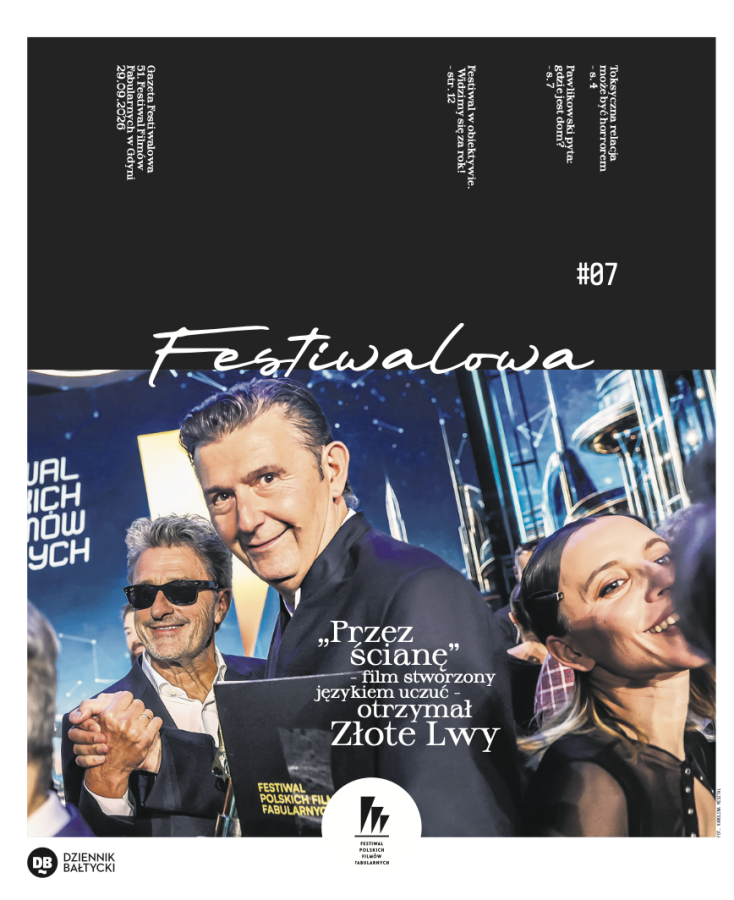 Gazeta Festiwalowa numer 7
 -
 Październikowe odsłony „50 na 51”
 -
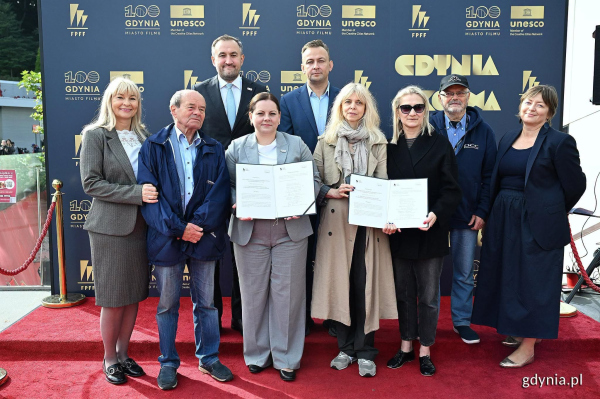 Srebrny Festiwal. FPFF dla osób starszych
 -
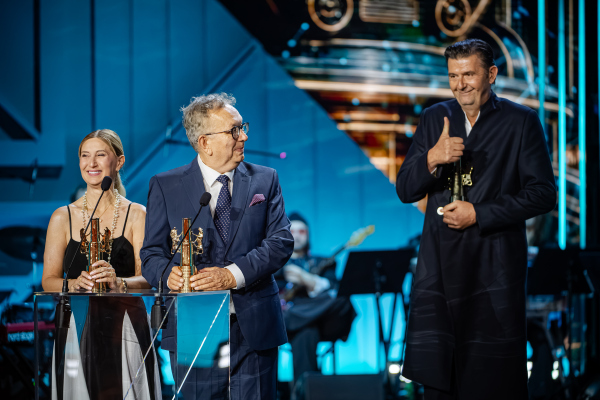 Closing Gala of the 51st Polish Film Festival – photo report
 -
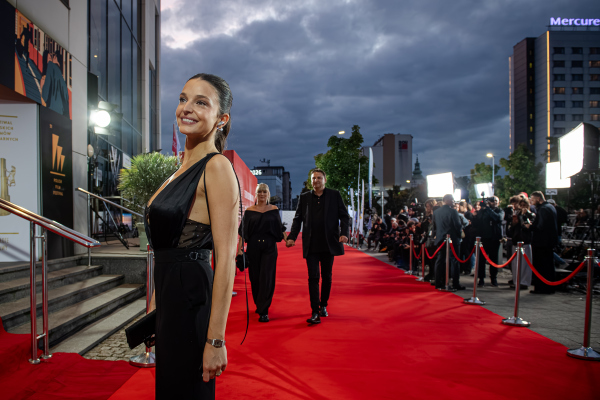 RED CARPET – photo report
 -
 Day six of the 51st PFF – photo report
 -
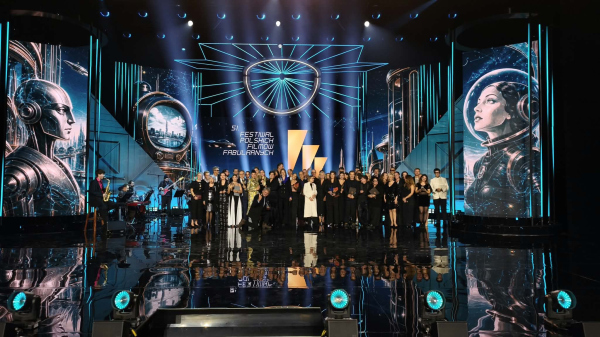 WINNERS OF THE 51ST PFF
 -
 What’s in store for today? SATURDAY
 -
 Festival Newspaper No 6
 -
 51st PFF Newsreel - Episode 5
 -
 Horror lies underneath
 -
 The Apostles of Rock’n’Roll.
 -
 The architects of chaos. How do women backstage at the PFF save the celebration...
 -
 YOUNG GALA – photo report
 -
 Day five of the 51st PFF – a photo report on festival life and accompanying...
 -
 Day five of the 51st PFF – photo report


