
Faceless State and Collective Soul: From Kieślowski's Documentary Shorts to the Heart of Brazilian Cinema

FIPRESCI & Polish Film Festival Joint Publication on Krzysztof Kieślowski
The year 2026 marks the 30th anniversary of the great Polish director’s passing, and to honour his enduring artistic influence, FIPRESCI & Polish Film Festival prepared a special collection of seven essays written by international film critics associated with FIPRESCI. The publication aims to reflect on Kieślowski’s cinema and its continuing relevance for contemporary audiences, filmmakers, and critics around the world.
Letícia Alassë
Brazil
What happens when a camera stops looking at what a country is and starts searching for its soul? Long before the Three Colours trilogy established Krzysztof Kieślowski as one of the leading figures of European cinema, he spent more than a decade documenting the social and political realities of communist Poland. Much of this early work, produced for Polish state television and largely inaccessible outside Poland until the rise of digital platforms such as YouTube, offers a revealing lens through which to examine the work of two pivotal Brazilian filmmakers: Eduardo Coutinho and Walter Salles.
The three filmmakers never worked together, yet they share a central obsession: how can cinema resist historical erasure, institutional violence, and the administrative reduction of human lives? This essay calls that structure the Faceless State, the bureaucratic stamp, the official statistic, the state-sanctioned version of history designed to outlive the people who actually lived it. Trained at the Łódź Film School, Kieślowski described his motivation simply as an "impulse to describe": the belief that what remains undocumented is also at risk of disappearing from collective memory. For Kieślowski, Coutinho, and Salles, the camera isn't just a tool for documentation; it is a counter-archive built to protect human memory from the state's quiet, flattening power.
To understand how this ethical gesture works on screen, it helps to look to Joseph G. Kickasola’s analysis in The Films of Krzysztof Kieślowski: The Liminal Image (2004). Drawing from the Latin limen ("threshold"), Kickasola uses the term for images bridging the visible and invisible: a reflection, an empty chair, or a quiet face. These objects remain physical while pointing toward unrepresentable truths: grief, faith, or political absence. For Kieślowski, Salles, and Coutinho alike, the liminal image operates as a bridge between the immediate material reality recorded by the camera and the unrepresentable historical truths beneath it.
Kieślowski himself eventually questioned the absolute possibilities of documentary cinema, articulating this epistemological shift in Kieślowski on Kieślowski (Stok, 1993). He came to believe that recording actual suffering placed him in an ethical position he no longer trusted himself to occupy. Because documentaries deal with ordinary, vulnerable lives, any truth shared in trust could easily be weaponized by an oppressive state or exposed to an intrusive public. He put it even more bluntly elsewhere, admitting he was “frightened of those real tears” and unsure whether he had any right to record them at all. That discomfort drove his move toward fiction—not to abandon reality or escape political engagement, but to reach the hidden interiority that a camera pointed at a real, vulnerable subject could never safely touch.
While Kieślowski protected his subjects through imagined narratives, Coutinho chose the opposite route—refining a documentary practice built on radical consent and subject autonomy. Walter Salles occupies the space between them, deploying narrative fiction to reconstruct historical wounds while keeping the archive strictly intact. Together, they offer three distinct strategies for cinematic testimony under the eyes of the Faceless State.
Institutional Anonymity: The Office and Coutinho’s Resistance
Kieślowski begins his formal investigation of institutional power in early documentary shorts such as The Office (Urząd, 1966). Filmed inside a Polish state pension bureau, the camera observes elderly citizens processed through a machine reducing decades of labor to administrative procedure. Clerks remain hidden behind frosted glass, disembodied voices and hands stamping documents. Kieślowski avoids narration, allowing sliding counters, endless queues, and suffocating paperwork to speak for themselves. Kieślowski neither narrates nor editorially intervenes; he simply allows the sliding counters, the endless queues, and the suffocating paperwork to speak for themselves. The result is quietly devastating: The Office demonstrates that the state does not need a human face to exert control. A small glass window, a counter, and a rubber stamp are more than enough to enact institutional violence.
If The Office observes the bureaucratic machine from the outside, From a Night Porter's Point of View (Z punktu widzenia nocnego stróża, 1977) reveals what happens when an individual willingly becomes its instrument. The film centers entirely on Marian Osuch, a factory night watchman who speaks candidly on camera about his obsession with discipline, surveillance, and punishment. Kieślowski neither interrupts nor judges him; the camera simply lingers as Osuch scans the street, eager to report minor infractions. Here, authoritarian ideology shows itself not through party slogans, but through the quiet routines of a low-level enforcer, refusing to treat state violence as an abstract force imposed from above.
The significance of From a Night Porter's Point of View lies in its total refusal to treat state violence as an abstract force imposed strictly from above. The Faceless State operates not only through central ministries and executive decrees, but through ordinary citizens who willingly internalize and reproduce its repressive logic. Osuch is simultaneously a distinct individual and an instrument of the system—a human face speaking fluently on behalf of an impersonal, dehumanizing authority. Taken together, The Office and Night Porter function as complementary studies of power: the former observes bureaucracy operating on the bodies of citizens, while the latter reveals how bureaucratic logic settles deep into the habits, language, and moral imagination of the individual.
This concern finds its Brazilian counterpart in Eduardo Coutinho’s non-fiction methodology. In Twenty Years Later (Cabra Marcado para Morrer, 1984), Coutinho illustrates what happens when state machinery turns its destructive force directly against the act of filmmaking itself. In early 1964, Coutinho had begun shooting a fiction film about the assassinated peasant leader João Pedro Teixeira, casting real rural workers and family members to recreate their own lives. When the March 1964 military coup struck, production was violently halted: police seized equipment and footage, the cast and crew were scattered into hiding, and the film project was effectively buried under two decades of state censorship.
When Coutinho returned to the surviving footage in the early 1980s during Brazil's political transition, he was no longer merely attempting to complete an unfinished fiction film. He was launching a cinematic search for the human beings the dictatorship had spent two decades trying to erase, beginning with Teixeira’s widow, Elizabeth, who had spent years living under an assumed name in rural obscurity. Elizabeth becomes the moral and emotional anchor of the finished work, embodying the persistence of lived memory against state-imposed oblivion.
What makes Cabra Marcado para Morrer landmark non-fiction is not only the testimony, but the physical state of the 1964 footage: scratched, faded, emulsion-scarred. The celluloid retains a cellular memory of state violence. Cutting these flickering black-and-white fragments against crisp 1980s color footage physically inscribes those lost years onto the screen. Like Kieślowski, Coutinho refuses an omniscient voiceover to declare that Brazilian history was violently fractured; the material texture of the medium makes the argument, transforming damaged film stock into a liminal artifact of historical trauma.
Two Simple Questions: Talking Heads
If The Office examines institutional anonymity and Night Porter reveals its internal adoption by the subject, Kieślowski’s Talking Heads (Gadające głowy, 1980) explores the inverse trajectory: the conscious recovery of individual agency. The formal premise of the short documentary is remarkably spare. Kieślowski asks a cross-section of Polish citizens, arranged chronologically by age from a one-year-old child to a hundred-year-old woman, the same two fundamental questions: “Who are you?” and “What do you want?” The camera simply holds on their faces in medium close-up as they confront the difficulty of responding.
The results are quietly profound. A child utters a truth of startling existential weight; a teenager freezes under the gaze of expectation; an elderly woman hesitates thoughtfully before voicing her modest desires. Sequentially arranged, these brief testimonies aggregate into a collective portrait of a society thinking aloud across generations. Talking Heads performs an extraordinary act of resistance without issuing a single ideological statement. By granting each subject the screen time and dignity to answer, the film systematically dismantles the state's attempt to reduce its citizens to an anonymous mass.
Eduardo Coutinho develops a remarkably similar ethical strategy in Edifício Master (2002), translating this pursuit of singular testimony to urban Brazil. Restricting his shooting location entirely to a single building in Copacabana, Rio de Janeiro, Coutinho converts a mundane residential block into a complex microcosm of society. His camera moves from apartment to apartment over a few days, relying on ambient light, dispensing with voiceover narration, and providing no preliminary biographical data beyond what each resident chooses to disclose during the face-to-face encounter.
The residents of Edifício Master offer an expansive tapestry of urban existence: one reflects quietly on a marriage that dissolved decades ago; another speaks openly about sex work without defense or self-pity; another recounts a brief, unforgettable encounter with Frank Sinatra. Coutinho approaches each subject with the same concentrated, non-judgmental attention. No story receives priority simply because it appears more dramatic or politically overt than another. Each testimony expands the emotional geography of the building while fiercely safeguarding the subject's narrative autonomy.
The visual and formal restraint shared by Talking Heads and Edifício Master reflects a fundamental ethical commitment. In both films, the director steps back from the role of authoritative interpreter to assume the far more demanding responsibility of an active listener. Formally, this manifests through radical yet minimalist choices: no dramatic musical cues dictating emotional response, no omniscient narrator asserting historical importance, and no aggressive editing designed to force a preconceived thesis. It represents a quiet, uncompromising refusal to reduce a complex human life to a mere sociological illustration.
State Violence as Catastrophic Absence
Walter Salles translates these same documentary ethics into the grammar of narrative fiction. In Central Station (Central do Brasil, 1998), the letters dictated by illiterate travelers to Dora—a cynical former schoolteacher set up at a small desk inside Rio de Janeiro’s central transit hub—function as Salles’s narrative equivalent to Kieślowski’s "talking head." These dictated letters offer physical proof that marginalized individuals existed and demanded remembrance. Salles lingers on the material textures of writing—paper grain, flowing blue ink, hands unaccustomed to pens—treating these documents not as plot devices, but as evidence of human presence amidst rapid modernization. Through the simple act of transcribing spoken words, Dora inadvertently becomes an ethical bridge between citizens the state has abandoned and the historical record that insists they were here.
Salles pushes this instinct further in I'm Still Here (Ainda Estou Aqui, 2024), adapted from Marcelo Rubens Paiva’s memoir of his family's ordeal during Brazil's military dictatorship in the 1970s. Salles could easily have framed the film as a conventional political thriller centered on clandestine interrogations. Instead, he anchors the camera inside the Paiva family home, immersing the viewer in a domestic life filled with music, beach trips, family dogs, and chaotic dinner conversations.
By establishing this vivid atmosphere of warmth, Salles allows state terror to arrive not as a sensational graphic spectacle, but as a sudden, catastrophic absence. When Rubens Paiva, a former congressman, is taken from his home by plainclothes security agents for routine questioning and never returns, the film refuses to depict the torture occurring in hidden military dungeons. Instead, it measures the full weight of state violence through the domestic space left behind: an empty chair at the dinner table, unread newspapers accumulating in the living room, a car sitting silent in the driveway, and family photographs that remain fixed to the wall as time moves forward.
The dictatorship’s most insidious weapon in I'm Still Here is not merely physical brutality, but the state's flat, years-long refusal to acknowledge that Rubens Paiva was ever detained, transforming a human being into an administrative non-person through official silence. This impenetrable bureaucratic vacuum is perhaps the most Kieślowskian element in Salles's film. Yet Eunice Paiva refuses to allow that state-enforced oblivion to stand. Rather than remaining frozen in passive grief, Eunice rebuilds her life, earns a law degree, raises five children, and spends decades forcing the Brazilian state to formally issue a death certificate admitting its crime. In chronicling her quiet, legal victory, Salles converges with Kieślowski and Coutinho at a shared ethical destination: history only retains its moral meaning when anchored to the singular, specific individual forced to survive it.
Chromatic Metaphors and the Visual Language of Walter Carvalho
The ethical imperative to make visible what institutions erase finds its visual expression in Walter Salles’s long collaboration with cinematographer Walter Carvalho. Their partnership reaches an aesthetic milestone in Behind the Sun (Abril Despedaçado, 2001), adapted from Ismail Kadare’s novel Broken April and relocated to the arid Brazilian sertão of 1910. In this world, the state is entirely absent—there are no police officers, courtrooms, or legal institutions. There is only an ancestral blood feud between two landowning families, locked in a cycle of reciprocal murder that neither side knows how to break.
Salles and Carvalho translate this psychological trap into purely visual terms, expanding upon a chromatic language established in Central Station. In Central Station, Carvalho’s camera bathed the journey across the northeast in warm, golden sunlight and dusty yellow tones, using natural light to evoke a sense of spiritual search and human connection. In Behind the Sun, Carvalho takes that same palette of amber, ochre, and blinding light and transforms it into something far more oppressive. The scorched yellow hues and blinding glare construct an environment that is both physical and psychological, a landscape that acts as a trap rather than a refuge. Within the frame, physical objects gain symbolic weight while retaining tactile reality: the black armband tied around Tonho's arm signaling his approaching death, the dark blood smeared across the wooden sugarcane mill, and the endless rotation of the ox-driven press turning in circles like inescapable fate.
Both filmmakers have spoken publicly about how directly Krzysztof Kieślowski’s visual masterworks influenced their approach to color, atmosphere, and camera movement during this period (Arte1, 2020). The connection becomes immediately apparent when examining the visual strategies of Kieślowski's primary cinematographers. In A Short Film About Killing (1988), cinematographer Sławomir Idziak famously utilized customized, sickly yellow-green filters that stripped the city of Warsaw of any visual warmth, transforming the urban landscape into a moral indictment against both private murder and state-sanctioned execution. In The Double Life of Véronique (1991), amber light, vintage glass lenses, and constant reflections on windowpanes continuously blur the boundary between the physical material world and the invisible intuition that Véronique experiences. Throughout the ten episodes of The Decalogue (1989), the color palette shifts subtly from story to story, acting as a visual barometer for each character's private moral crisis.
For Idziak and Kieślowski, as for Carvalho and Salles, color, light, and texture aren't just extra details tacked on at the end. They do the heavy emotional lifting that dialogue simply can't handle. The yellow and amber tones Carvalho uses across Central Station and Behind the Sun bring Kieślowski’s "impulse to describe" to life—a visual style built to capture those quiet, hidden parts of human experience that speeches or official reports inevitably strip away.
Reclaiming Melodrama: The Personal as Political
This visual language of color and restraint provides the aesthetic foundation for Walter Salles’s engagement with melodrama. Though Salles’s filmography—Central Station, Behind the Sun, I'm Still Here—utilizes melodramatic tropes like broken homes and absent fathers, he deploys them with deliberate intent. He recognizes that melodrama's emotional architecture offers a direct accessibility that abstract political analysis or cold documentation lacks.
In Salles’s cinema, melodrama is never a cheap tool to manipulate the audience; it functions as a vital bridge linking private interiority with national history. Dora's gradual, reluctant attachment to Josué in Central Station reveals far more about a nation abandoning its most vulnerable citizens than a statistical report on urban poverty ever could. Similarly, Tonho's obligation to avenge his brother in Behind the Sun takes the abstract concept of feudal violence and turns it into an immediate, physical weight borne by one specific young man. In I'm Still Here, the domestic warmth of the Paiva family causes the dictatorship's cruelty to land with crushing force, precisely because the audience has shared in the everyday beauty that the regime systematically destroys.
Crucially, Salles avoids the trap of sentimental excess by exercising extreme formal restraint at the exact moments where traditional melodrama usually overflows. In Central Station, when Dora sits alone in a bus terminal to read the letter she wrote to her estranged mother, she does not break down into dramatic sobbing; she simply sits quietly with the paper, allowing her face to hold the weight of decades of isolation. In I'm Still Here, when Eunice Paiva is finally presented with the official state document recognizing her husband's death after decades of silence, Salles denies the audience a grand courtroom monologue or a heroic musical swell. Instead, the film offers a quiet moment of internal recognition—decades of patient waiting compressed into a subtle shift in her posture.
This commitment to emotional restraint mirrors Kieślowski’s own artistic philosophy when he stepped away from non-fiction filmmaking: a deep conviction that the most profound human experiences demand the smallest cinematic gestures rather than the loudest ones. Melodrama, under Salles's direction, becomes less a conventional genre than a rigorous visual language capable of connecting private memory with collective history without sacrificing either intimacy or political urgency.
The Unseen Burdens of Existence
Kieślowski’s early documentaries established a core conviction: the filmmaker's primary duty is to observe what official institutions reduce to silence. Moving into narrative fiction did not weaken his political vision; it simply offered a new syntax for addressing the unseen burdens of existence.
Mapped onto Brazilian cinema, this framework shows how Walter Salles and Eduardo Coutinho join a shared lineage of artistic resistance. Though working under distinct conditions, all three directors recognize that official history favors the language of authority: bureaucratic silences, administrative records, and institutional denial. Against this erasure, their films insist that collective memory requires preserving singular individual lives.
Ultimately, the convergence of Kieślowski, Coutinho, and Salles shows that cinema’s most radical power lies in cultivating a patient, attentive gaze. Whether through quiet non-fiction listening, the physical texture of a letter, or the restraint of fictional re-enactment, these directors position the human face as the threshold between private grief and public history. In an era of historical amnesia and abstract metrics, their cinema asserts that no institutional silence holds the final word on human experience.
Letícia Alassë - born in Rio de Janeiro and now based in Paris, Letícia Alassë is a journalist, film critic, and researcher specializing in discourse analysis, psychoanalysis, and the global reception of Global South cinema. She holds a Master’s degree in Culture and Communication from Université Paris 8. Letícia is a voting member of the Golden Globes and the Académie Lumière, as well as a member of ABRACCINE and FIPRESCI. Since 2016, she has been covering major international film festivals for the website CinePOP.
Bibliography
https://www.youtube.com/watch?v=VtQkLI0mHV4Arte1. (2020). O cinema de Kieślowski por Walter Salles e Walter Carvalho | Arte1 em Movimento [Video]. YouTube.
Kickasola, J. G. (2004). The Films of Krzysztof Kieślowski: The Liminal Image.
Continuum.
Kieślowski, K., & Stok, D. (Eds.). (1993). Kieślowski on Kieślowski. Faber and Faber.
-
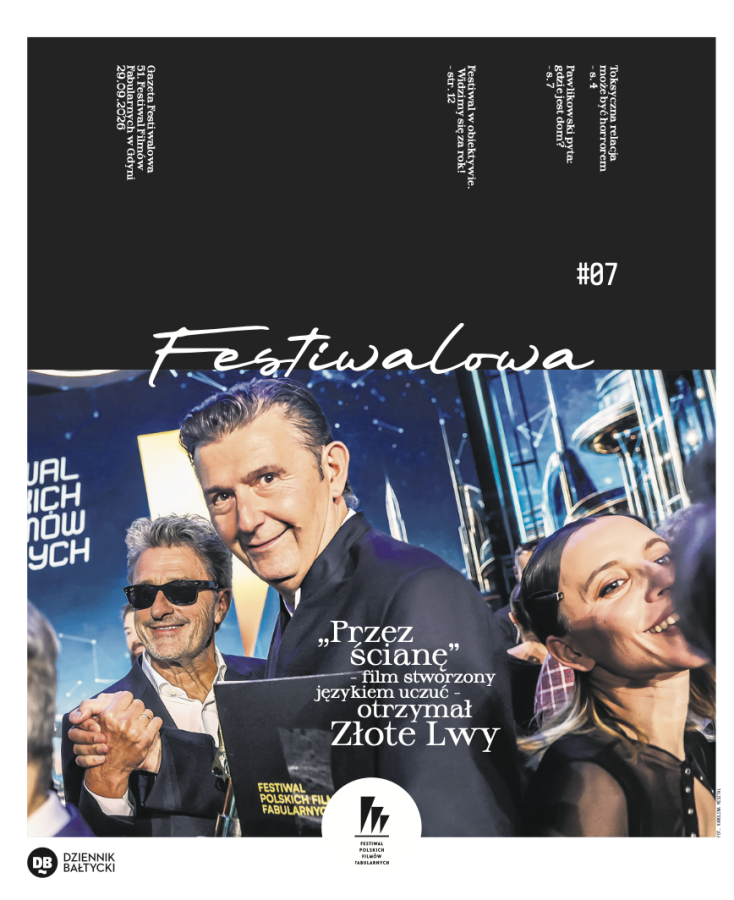 Gazeta Festiwalowa numer 7
 -
 Październikowe odsłony „50 na 51”
 -
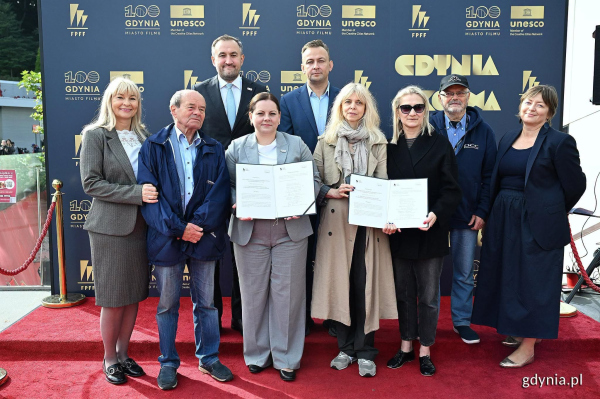 Srebrny Festiwal. FPFF dla osób starszych
 -
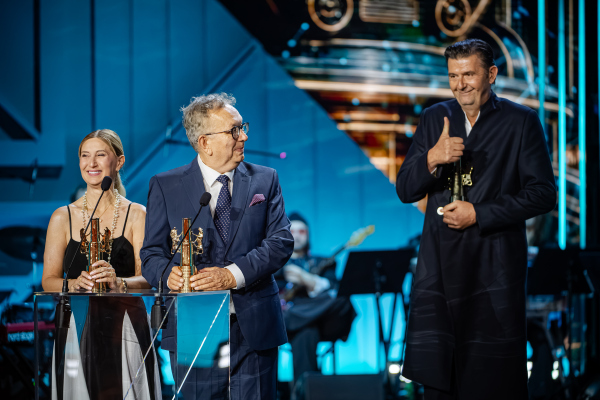 Closing Gala of the 51st Polish Film Festival – photo report
 -
 RED CARPET – photo report
 -
 Day six of the 51st PFF – photo report
 -
 WINNERS OF THE 51ST PFF
 -
 What’s in store for today? SATURDAY
 -
 Festival Newspaper No 6
 -
 51st PFF Newsreel - Episode 5
 -
 Horror lies underneath
 -
 The Apostles of Rock’n’Roll.
 -
 Notions of Intertextuality in the Cinema of Krzysztof Kieślowski
 -
 The architects of chaos. How do women backstage at the PFF save the celebration...
 -
 YOUNG GALA – photo report
 -
 Day five of the 51st PFF – a photo report on festival life and accompanying...


