
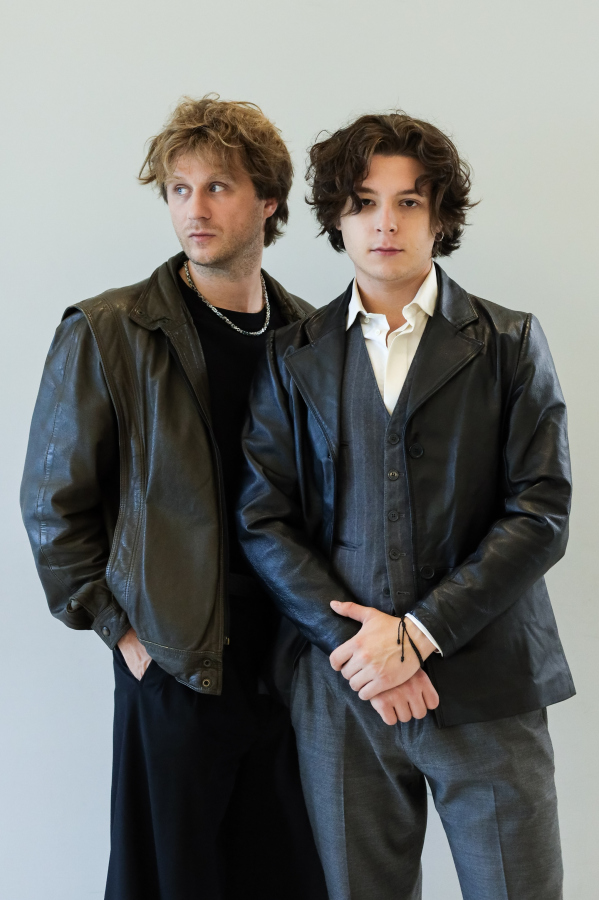
How does the younger generation of filmgoers view the state of Polish cinema? Is it possible to enjoy Polish films, or do young people simply feel that the industry is stagnating and regard going to the cinema as a chore? Jakub Flakowski talks to Mikołaj Brzecki, Szymon Karbowy and Igor Walkowiak, members of the Youth Jury at the 51st Polish Film Festival in Gdynia.
What is your relationship with Polish cinema like?
Mikołaj Brzecki: I must admit that I don’t watch much Polish cinema. I do regret it a bit, but somehow I just couldn’t bring myself to get into it. I felt I should start with the classics and work my way through chronologically, but on the other hand, it’s precisely the older films that young people always associate with being a bit of a slog.
Szymon Karbowy: When I come across Polish films, they’re usually older titles – classics of the genre that I want to familiarise myself with – it’s a sort of investment.
Are you afraid of Polish cinema?
S.K.: I think we’re all a bit afraid of it. Of course, we do come across good Polish films, but there’s always the risk of wasting time in the cinema. Because you won’t be able to hear a thing. Because it’ll be melodramatic and gloomy, and I’ll leave the cinema feeling down, even if the film wasn’t actually sad. Many filmmakers are trying to move away from that sort of atmosphere, but so far there aren’t many who are doing anything more interesting than mindlessly gazing into a mirror.
Igor Walkowiak: Well, sort of! If I have to choose between a Polish film and a foreign one, I’d still rather watch the latter. There’s less chance I’ll get bored watching it. Polish cinema is, after all, rather low-quality. I love some films, but when I go to the cinema and see what’s on, it’s usually just awful commercial rubbish. These films lack what cinema used to have in the past.
And what do you miss the most?
I.W.: Well, perhaps a bit more artistry, something truly captivating. We’re certainly falling short when it comes to production. The films are ‘television-style’. Budgets are rising – in fact, we’re not really lagging behind other European countries – yet it seems as though production standards are much lower. The films are tame, shot as if they all follow the same formula.
S.K.: I don’t see any universal heroes in our cinema, the sort often found in genre films ‘over in the West’. Polish films are, to a fault, exclusively about Poland. Of course, I have no problem with that, but sometimes these attempts to analyse society can be rather tiresome.
So, as usual, it’s all about genre films?
S.K.: It seems to me that we rarely come across films that bridge the gap between commercial productions and arthouse cinema. Genre cinema abroad offers entertainment for the ‘mass audience’, but it’s on a completely different level to the most-watched productions here at home, isn’t it?
M.B.: There is no middle ground in Polish cinema. Another matter is Polish horror, which has nothing to compare it with. That is why it must have ‘horror’ characteristics, and we must aspire to greatness ‘like in America’ in order to meet unattainable expectations. We’re unable to strike a balance between a box-office hit and ambitious auteur cinema, which we’re unlikely to see anyway, apart from in short films. On the other hand, I feel that we have some incredibly inflated expectations of our own cinema.
I.W.: Last year, around Oscar season, I saw a headline that read: ‘Another year of the Oscars, and Poland is once again without a single nomination’. Do we really need to set our sights so high? Of course, we have a rich history and outstanding filmmakers, but we cannot expect world-class cinema whilst we have such problems on our own doorstep. Everyone is waiting for the next Wajda to take us to the big time. And then another film by a promising director fails to live up to expectations. It falls out of favour with the public.
Do you think there’s a solution to this?
M.B.: We need to break away from the demands and standards of ‘abroad’. Poland certainly doesn’t lack creators with ideas and the drive to take action. Art-house cinema certainly has room for experimentation, but I’ll say it again – we’re missing that golden middle ground.
I.W.: Every year there are two or three big-budget productions, and they’re usually the sort of films you can safely take your family to see at the cinema, such as Chopin, a Sonata in Paris or the upcoming The Doll. I get the impression that there’s a prevailing belief in Poland that it isn’t worth taking risks on big-budget films, and that such ‘safe’ films simply fail to attract audiences – and, more importantly, young people – to the cinema.
S.K.: I don’t feel qualified to diagnose the system’s problems, but I get the impression that sometimes we don’t really know what story we want to tell. I’d like to wish Polish filmmakers the courage to look at their own work from a distance. It seems to me that there’s a strong cult of the artist in Poland. There’s no need to force a breakthrough if you’re making genre cinema – and sometimes a screenplay tries to tackle ten issues at once, and the film ends up being a disaster as a result. A filmmaker doesn’t have to answer to anyone – not everyone has to try to create a new monumental work or a completely new movement. It’s enough just to make good films, without comparing oneself to anyone else. Perhaps this would help to heal our national complexes and enable us to appreciate our own culture more?
Is it possible to make a film that is detached from the system and from decades of history and influences?
M.B.: I suppose it’s getting easier as time goes on. All you need to do is make a solid genre film, backed by a top-class cast, whose marketing will attract young audiences. Year on year, younger filmmakers are emerging and that historical pressure is easing, so it’s only a matter of time.
S.K.: It’s not quite as black-and-white as that. We don’t have to dismiss everything; we don’t have to immediately write off our entire cinematic history. In the long run, the quality of Polish productions will improve, step by step. There will be a generational change amongst filmmakers, and consequently amongst audiences too. As jurors, however, we are a group with an interest in cinema, to whom these gems reach, but I am well aware that ‘auteur cinema’ is largely stigmatised by the general public.
So what does the new generation of cinema-goers need? Which film do you consider to be a benchmark for a new standard of quality?
I.W.: There’s a lack of courage and originality. Everything follows the same old formula: historical and period films. I’m fed up with it by now and don’t go looking for them myself. I’d rather watch something original, something that stirs my emotions. The same goes for my peers.
S.K.: Of course it’s possible to make good historical films, but they cannot be based on tugging at the heartstrings and portraying the past as an impenetrable gloom. There has to be an interesting story behind it all, otherwise the film won’t hold up, even if it’s spectacular. We don’t need to pretend to be anything we’re not, of course; with our budgets, we’ll never catch up with the Americans.
M.B.: I think that No Ghosts on Good Street is a film that seems detached from this race to emulate the West. In its heyday, Polish cinema had an undeniable identity, which has somehow been lost. Emi Buchwald’s film is something fresh, something that makes me think that perhaps everything is still ahead of us.
I.W.: I’m not sure whether we can include documentaries in this category as well. I recently watched Maciej Cuske’s Candidates of Death and Letters From Wolf Street, and these are personal, original ideas that I really enjoyed from a documentary perspective; I felt they offered a fresh perspective.
-
 Gazeta Festiwalowa numer 7
 -
 Październikowe odsłony „50 na 51”
 -
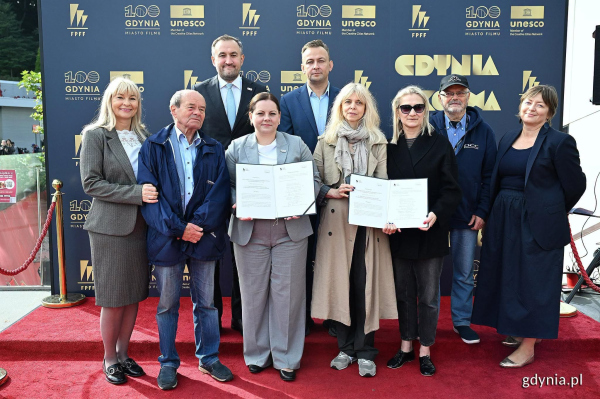 Srebrny Festiwal. FPFF dla osób starszych
 -
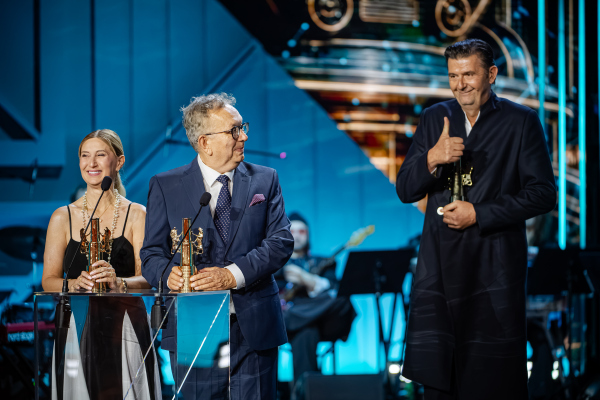 Closing Gala of the 51st Polish Film Festival – photo report
 -
 RED CARPET – photo report
 -
 Day six of the 51st PFF – photo report
 -
 WINNERS OF THE 51ST PFF
 -
 What’s in store for today? SATURDAY
 -
 Festival Newspaper No 6
 -
 51st PFF Newsreel - Episode 5
 -
 Horror lies underneath
 -
 The Apostles of Rock’n’Roll.
 -
 Notions of Intertextuality in the Cinema of Krzysztof Kieślowski
 -
 The architects of chaos. How do women backstage at the PFF save the celebration...
 -
 YOUNG GALA – photo report
 -
 Day five of the 51st PFF – a photo report on festival life and accompanying...


