
– The people of Gdynia love their city dearly. They are proud of it. When asked what is the first word that comes to mind when they think of Gdynia, many reply ‘love’ – says Aleksandra Boćkowska, author of the book ‘Gdynia. Pierwsza w Polsce'.
Mateusz Demski
Mateusz Demski: Why is Gdynia ‘the first in Poland’?
Aleksandra Boćkowska: Because it’s the first city from the sea. Because it’s the most self-satisfied of all cities – at least in Poland. Because, in many respects, it really was a leader, at least for a while. Built at record speed during the interwar period. It was intended to serve as a support base for the emerging port – the first of its kind in Poland – but, as time has shown, it turned out to be the first city in Poland designed according to the principles of modernism.
Whilst working on the book and sifting through old newspapers, I kept coming across the phrase ‘Gdynia as the first city in Poland’, which was then elaborated upon: ‘it joined the ranks of cities that are members of the World Trade Centre Association, privatised municipal enterprises, took on the state’s responsibilities, attracted a Coca-Cola factory, secured grants from the European Union long before Poland’s accession to the EU, purchased electric buses and advertised itself on the streets of other cities.’
In short: it all happened first in Gdynia.
Gdynia is a master of self-promotion. The phrase ‘Gdynia as the first city in Poland’ had become so ingrained in the officials’ minds that they used it at every opportunity. They repeated it like a refrain, which after a while had the opposite effect to that intended. A few years ago, activists from the ‘Bryza’ association, which takes a critical view of the local authorities, set up a Facebook page called ‘Gdynia as the first city in Poland’, on which they highlighted the authorities’ blunders.
Another thing is that the residents of Gdynia, regardless of whether they criticize the city council or not (incidentally, political debates here are extremely heated), love their city dearly. They are proud of it. When asked what is the first word that comes to mind when they think of Gdynia, many answer: “love.”
At first, this incredible sense of local patriotism seemed a little grotesque to me. Over time, as I came to understand its origins, I’ve come to regard it with great respect.
In one of your interviews, you said that Gdynia was also the first to join the European Union.
This is, of course, a simplification, but Gdynia has indeed aspired to European identity since the early 1990s. Contacts were established with local governments in Western countries; Mayor Franciszka Cegielska served as a delegate to the Council of Europe starting in 1992; the city successfully applied for pre-accession funds; and the first transfer arrived, if I’m not mistaken, in 1994, a decade before Poland joined the EU. In 2002, Gdynia received the Europe Prize, and on that occasion, Mayor Wojciech Szczurek invited residents to Kościuszko Square to pose for a group photo. Seventeen thousand people showed up, and together they sang ‘Ode to Joy’. Soon after, in a referendum, they overwhelmingly supported accession.
Its European character was fostered by its location on the Baltic Sea and cooperation with Scandinavian countries, as well as with other Western nations. This resulted, first, in contacts, second, in skills, such as writing grant proposals, and third, in an openness to new ideas. People in Gdynia were talking about reducing car traffic, sustainable development, and environmental protection long before these topics became trendy. Whether anything actually came of all that talk is another matter.
It should be added that Gdynia, like other port cities, was already more ‘foreign’ than the rest of the country during the People’s Republic of Poland. Almost every family had a sailor. Thanks to this, clothes and music from the West arrived here first. People from all over Poland would come to the secondhand shops on the enchanting Świętojańska Street. Prof. Jerzy Kochanowski, who studied the black market in People’s Poland, investigated what was smuggled to the coast and in which years. Many of these items were all sorts of electronic gadgets, plastic goods, and symbols of modern life.
-
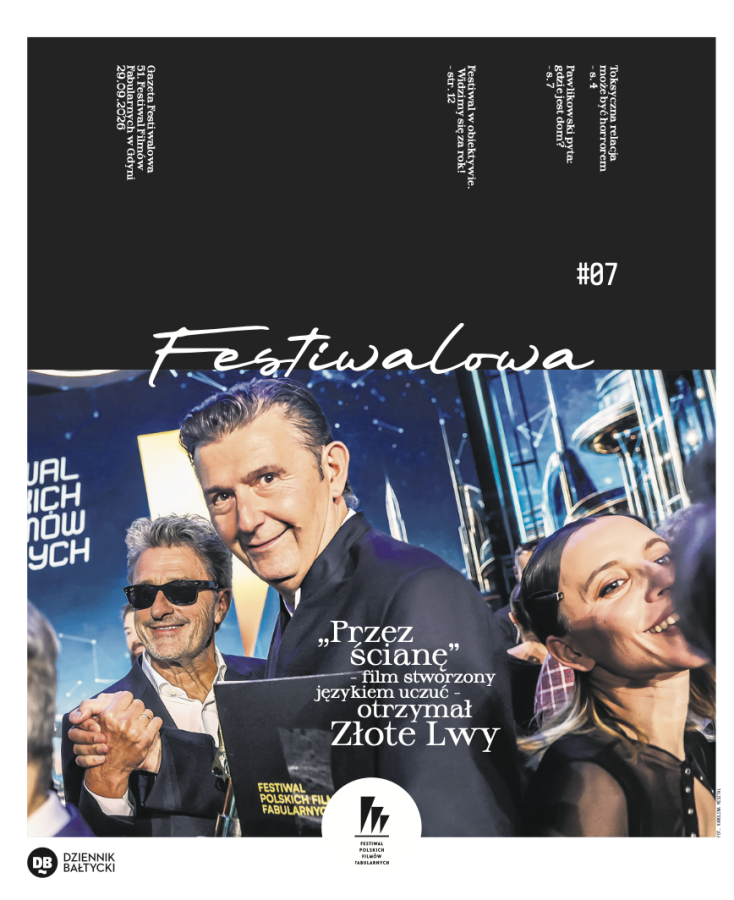 Gazeta Festiwalowa numer 7
 -
 Październikowe odsłony „50 na 51”
 -
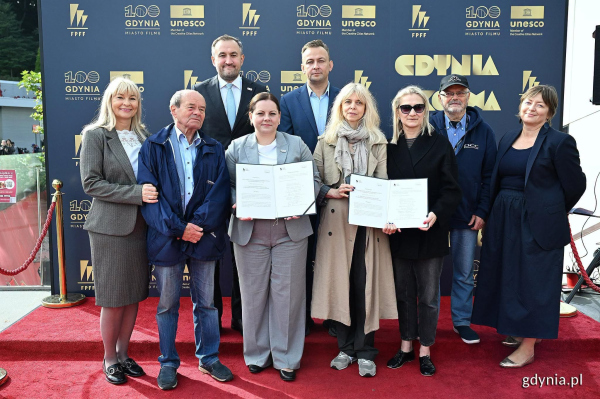 Srebrny Festiwal. FPFF dla osób starszych
 -
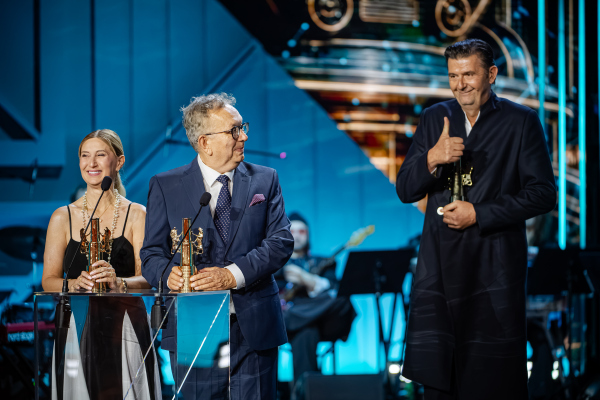 Closing Gala of the 51st Polish Film Festival – photo report
 -
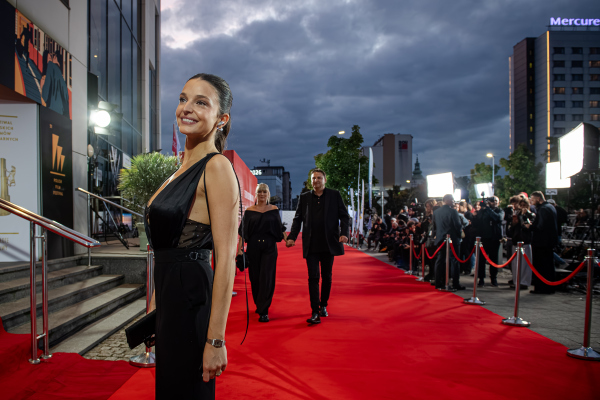 RED CARPET – photo report
 -
 Day six of the 51st PFF – photo report
 -
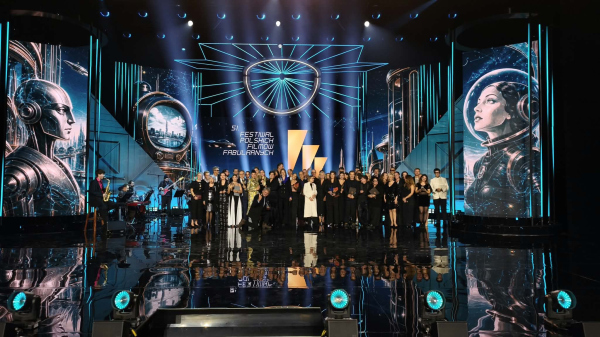 WINNERS OF THE 51ST PFF
 -
 What’s in store for today? SATURDAY
 -
 Festival Newspaper No 6
 -
 51st PFF Newsreel - Episode 5
 -
 Horror lies underneath
 -
 The Apostles of Rock’n’Roll.
 -
 Notions of Intertextuality in the Cinema of Krzysztof Kieślowski
 -
 The architects of chaos. How do women backstage at the PFF save the celebration...
 -
 YOUNG GALA – photo report
 -
 Day five of the 51st PFF – a photo report on festival life and accompanying...


