
– In the world of contemporary art, there is a specific, pre-established code that artists follow; I speak a different language and, in doing so, I challenge the status quo. Because of this, I still feel like an outsider who constantly has to prove something,’ says Patryk Różycki, a visual artist and painter whose life and work form the basis of Łukasz Ronduda’s film Tell Me What You Feel.
Mateusz Demski
Mateusz Demski: Tell me, where are you from?
Patryk Różycki: I was born in the small town Koło, a place known for its production of toilets. I like to talk about it – it’s a bit of local pride. It always amazed me when I was abroad and saw that logo in a toilet. Once, in Lviv, I took out my camera and started filming to show my parents that our ‘Koło’ is everywhere.
I come from a family that experienced both social advancement and social decline. Shortly afterwards, when I was six, we moved to the countryside. At first, I didn’t understand it at all. After all, everything was fine; we used to visit our family in Lower Silesia every weekend. We lived in a block of flats, and my parents were planning to buy a house. Suddenly, my sister died, my father fell ill, went on disability benefit, and we started running out of money. He was the chairman of the trade union at KORUND, a factory that produced abrasive discs and products.
Do you remember anything from that time?
Mainly sadness and tension between my parents. My mum was forced to leave her wedding rings at the pawnbroker’s. I wondered why she had to sell something that was important to her.
It was only when we moved to the countryside that it began to dawn on me what had happened. At the new school, there was a division into classes based on background. The children who lived closest to the primary school – that is, in the local parish – went to Class A; they were a bit better dressed and kept themselves apart from the rest. I ended up in the class with children from farming families, even though my parents had never worked on the land. My father was an intellectual; even after we’d moved to the countryside, he never stopped wearing a suit.
Were you already drawing or painting back then?
No, I’ve never been interested in art, because I didn’t have access to it. My father used to do all my school drawings for me, whilst I was busy playing football.
I imagine there wasn’t a community centre or a cinema in the area.
Our access to culture was much the same as that of most people living outside the big cities. It mainly came to me through the telly, the TV series we used to watch as a family. I’ve always associated culture with something you experience together. I remember watching Rocky over and over again. Łukasz’s film is a bit like that story. Admittedly, his protagonist doesn’t get the chance to fight for the world title, but he does grapple with reality.
How did it come about that you eventually took up art?
Towards the end of lower secondary school, a teacher wrote the schools’ websites on the blackboard, and among them was the Art School in Koło. I didn’t have a computer back then, so I had no way of checking it out. I wanted to be a sports journalist, but I wasn’t doing very well at school, so I wasn’t thinking about going to sixth form. I told my dad that I wanted to go to the art school. We went for an interview; my friends’ mum gave me a book called ‘Sztuka i czas’ (art and time), and I started copying famous works onto A4 sheets of paper. I drew a black square on a white background. The lady who interviewed me was very surprised by this.
Your paintings are a far cry from Malevich’s.
High school gave me a passion for art, but a key moment came in my second year, when I fell hopelessly in love. My parents made sure my passion grew; they bought me various art books about artists. In one of them, I saw a painting by Van Gogh in which he had depicted a woman leaning on her knees and titled it ‘Sorrow’. That’s when I realised I didn’t want to paint still lifes – those apples I’d never eaten and which had no connection to me whatsoever.
And you started painting yourself.
I was devastated by that unhappy love affair. I blamed myself for being ugly and unattractive. I would sit in front of the mirror all day and began to paint my nudes in black ink. In this way, I tried to come to terms with the body I loathed. It helped me to accept it.
Your paintings often depict scenes from your family life. When did you involve your loved ones in this process?
I’ve been doing this from the very beginning; my family were my closest models. When I discovered Lucian Freud’s work in Year 4, I thought I’d like to work in a similar way. My father set up a barn for me; that’s where I had my studio. And I started painting them. Mum was almost naked, my sister was lying on the floor. Every time I painted something, I’d go and show it to them. They’d comment on it; they usually liked it. That’s when I realised that if they understood it, then this was the sort of art I needed to be creating. At university, I began to think more about what a painting should convey, and what purpose my art should serve at all.
And you painted scenes like these: ‘The house my parents were going to buy before my sister died, seen through the window from the back seat of a Polonez Caro’, ‘My sister Oliwia taking her CV to a shop in Konin’, ‘The moment my brother Roland died in a staff changing room’.
I also painted the moment when my parents took out a loan to pay for my studies. That was important to me because I felt they had to go into debt so that I could get through my education and, in the future, move up the social ladder. I painted the stories that shaped my father – such as the abuse he suffered at the hands of his own father. Or the moment when Grandad Antoni took Dad out into the fields, showed him the people working there and said: ‘See, this is what hard work looks like. Can you smell the manure? It’s better to study and work lightly, isn’t it?’
-
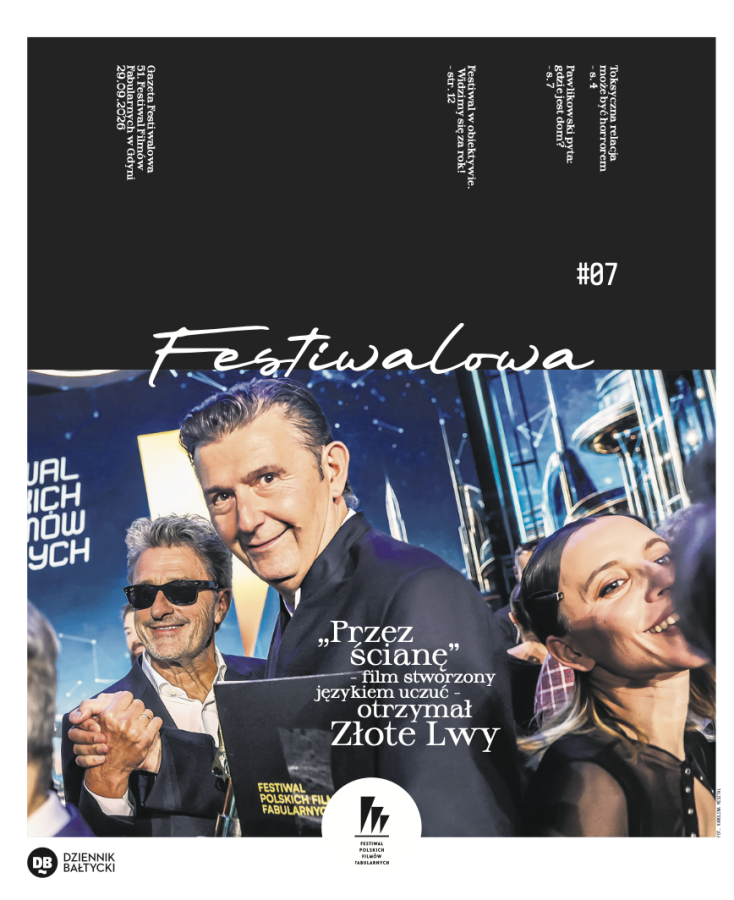 Gazeta Festiwalowa numer 7
 -
 Październikowe odsłony „50 na 51”
 -
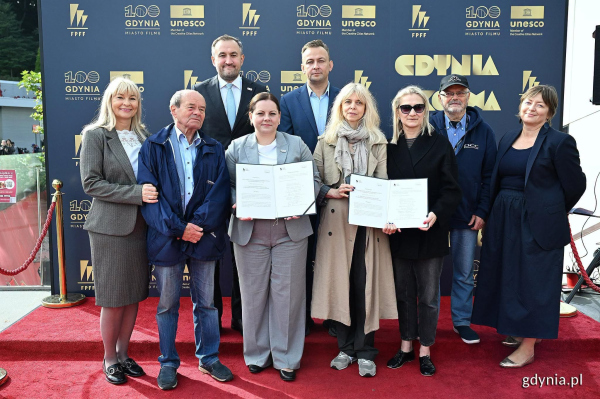 Srebrny Festiwal. FPFF dla osób starszych
 -
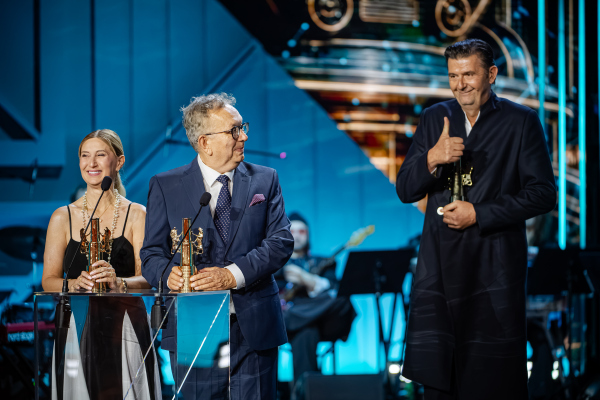 Closing Gala of the 51st Polish Film Festival – photo report
 -
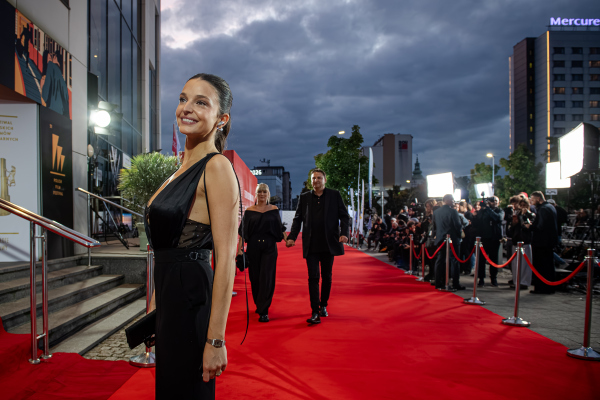 RED CARPET – photo report
 -
 Day six of the 51st PFF – photo report
 -
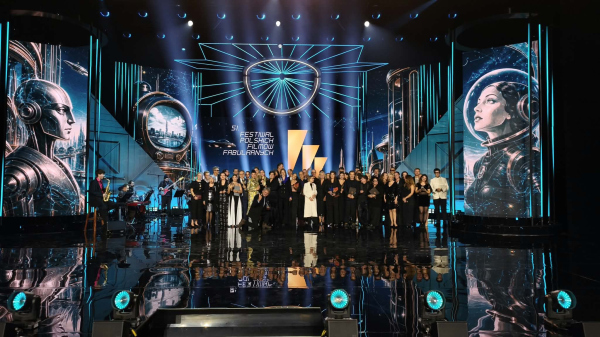 WINNERS OF THE 51ST PFF
 -
 What’s in store for today? SATURDAY
 -
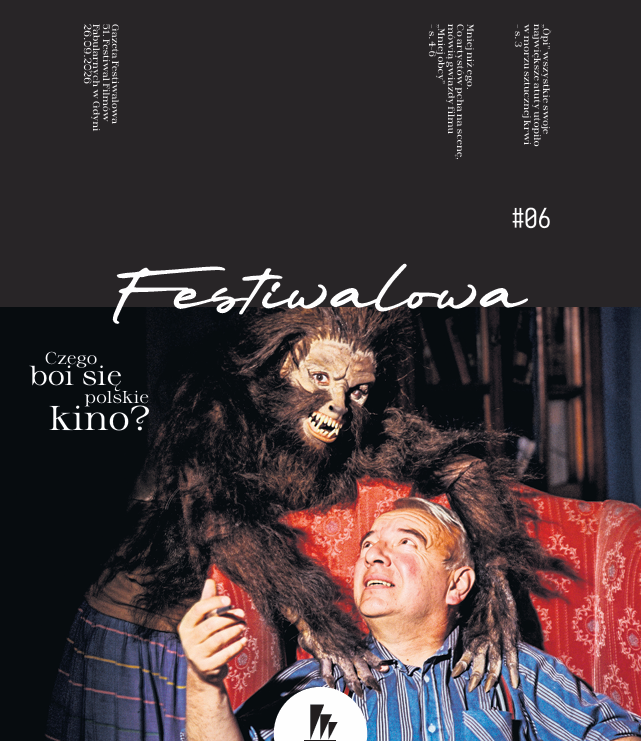 Festival Newspaper No 6
 -
 51st PFF Newsreel - Episode 5
 -
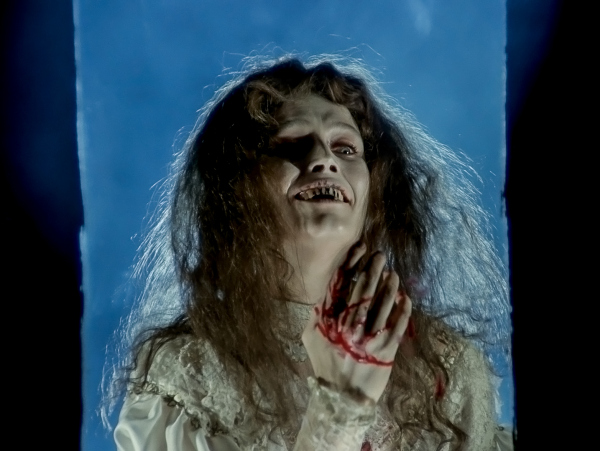 Horror lies underneath
 -
 The Apostles of Rock’n’Roll.
 -
 Notions of Intertextuality in the Cinema of Krzysztof Kieślowski
 -
 The architects of chaos. How do women backstage at the PFF save the celebration...
 -
 YOUNG GALA – photo report
 -
 Day five of the 51st PFF – a photo report on festival life and accompanying...


