Documentary as Historical Recordkeeping: Kieślowski's Early Approach to Documentaries and Its Afterlife in Hindutva-Era, Right-Wing India

FIPRESCI & Polish Film Festival Joint Publication on Krzysztof Kieślowski
The year 2026 marks the 30th anniversary of the great Polish director’s passing, and to honour his enduring artistic influence, FIPRESCI & Polish Film Festival prepared a special collection of seven essays written by international film critics associated with FIPRESCI. The publication aims to reflect on Kieślowski’s cinema and its continuing relevance for contemporary audiences, filmmakers, and critics around the world.
Virat Nehru
Australia
“If something hasn't been described and a record of it doesn't exist — it doesn't matter what form the description takes: a film, a sociological study, a book, or even just a verbal account — then you can't refer to it. You have to describe the thing or situation before you can deal with it.”
Krzysztof Kieślowski
To borrow and perhaps mangle the opening of Jane Austen’s Pride and Prejudice, it’s a truth less universally acknowledged that Krzysztof Kieślowski, beloved director widely known for his fiction features, began his early career by making documentaries.
In the late 1960s and early 70s, Kieślowski put into practice what he believed the documentary form was designed to accomplish under strict censorship. He argued that in a state where official culture manufactures reality, description itself is a political act—before argument, before critique, before any position the film might take. The record must exist before somebody is able to do anything with it.
Thirty years after Kieślowski's death, this essay reads his two early documentaries—Robotnicy '71 (Workers ’71, 1971) and Życiorys (Curriculum Vitae, 1975)—through this philosophy. It probes Kieślowski’s reasons for abandoning the form and escaping to fiction. Despite his retreat, there remains an enduring power in Kieślowski's articulation of the purpose documentaries serve under authoritarian-adjacent regimes that continues to be relevant.
Indian documentary filmmaker Anand Patwardhan, working under structurally comparable conditions of state censorship for over five decades, has no plans for a similar escape to fiction. Comparing the two reveals something uncomfortable about Kieślowski's retreat, and something clarifying about Patwardhan's persistence: that the act of filming itself can became a form of historical recordkeeping against a regime intent on rewriting the past.
Workers ‘71
Kieślowski called Workers ’71 his “most political film” because it is deliberately devoid of any humanistic point of view. The film documented the aftermath of the December 1970 protests in Poland, where workers went on strike expressing dissent against the sudden increase in prices of basic amenities under the Communist leadership of Władysław Gomułka. Due to nationwide protests, Gomułka was replaced by Edward Gierek as the new Party leader. The documentary laid bare the reality that while the face of the leadership might have changed, it made little difference to the material living conditions of the Polish working class. The film’s crew travelled to small towns, villages and factories where workers articulated their desire for change, a sentiment that was at odds with the Party and its newly crowned leader Gierek. The Party was keen to whitewash its image and prove that the reforms it had brought about as a result of the protests were having their desired impact. Kieślowski acknowledged that by making the film, the crew was in a race against time, filming those contested moments before they disappeared, knowing they would end. The point was to get the record into existence while it was still possible, before somebody erased it forever.
It’s important to understand Kieślowski’s underlying fear of creative expression being co-opted by the state with an agenda of its own. This fear is central to both—the formalist choices made in Workers ’71 as well as his eventual retreat from the documentary form altogether and escaping towards narrative features. Kieślowski and his team were forced to make cuts they termed “particularly nasty.” The version they shot was never shown. One day, the sound rolls suddenly disappeared from the cutting-room and rolls containing interviews were deliberately left out of the film. When the rolls reappeared two days later, Kieślowski was summoned by police and accused of smuggling the recordings to Radio Free Europe. This experience made Kieślowski feel like he was being used as some kind of pawn in a larger political game.
"Somebody was playing with someone but I didn't know what the game was. I didn't know what they were playing at and, to be honest, I didn't know who was playing with whom. I suspect that was one of the reasons why I grew sick of it all. I realised yet again how unimportant I was.”
This feeling of helplessness, of becoming an unwitting player in the larger machinations of the state, is one Kieślowski keeps returning to in the decade of 1971-1981, and it chips away at his conscience. By the time the events surrounding the making of Dworzec (Station, 1981) occur—which I will touch upon later—Kieślowski had made up his mind to say goodbye to the documentary form and fully commit to fiction. The seeds of this departure were sown in Workers ’71. Kieślowski had made a film that was designed to evade manipulation, and yet he failed in that endeavour. The counter-record he had created to document the workers had, in the state's hands, become a potential instrument against them.
Curriculum Vitae
Curriculum Vitae is another important film from Kieślowski’s body of work that demonstrates the creativity he employed to create a counter-record while functioning within the limits of censorship.
The film depicted a real Party Control Committee, an authentic disciplinary body with the power to expel Party members, sitting in judgment over a fictional defendant whose life history Kieślowski had written.
“Everything concerning the Party Board of Control in Curriculum Vitae was real, because it was a real Party Board of Control. Nobody was specially selected for it. I simply went to various Party Committees and asked them to give me the most enlightened, the most liberal, the most circumspect Party Board of Control in Warsaw. So they gave me this Board because it was the best.”
This is just the beginning of where the lines between fiction and reality blur. Kieślowski cast a real victim in the role of the defendant, who had been expelled and harassed by the Party, to perform a fictional version of his own experience before a real tribunal. This resulted in a film whose factual core rang true because the frame around it had been artificially constructed. The film directly addressed the state apparatus—Party members, reformist insiders, the political class—but did so in a subversive manner. By showing how absurd the state machinery was in practice, the film presented an honest account through manufactured circumstances. Curriculum Vitae is notable, and not just for its ethical considerations. It shows that sometimes, a deliberate distortion of reality, when strategically employed against an oppressive apparatus, can reveal truths the state would prefer to remain hidden.
Departure from Documentaries
While making Station (1981), which would prove to be Kieślowski’s last dance with documentaries, police confiscated footage shot as part of the film. A girl had murdered and dismembered her mother near the vicinity of where the film was being made, and the police suspected the crew's hidden camera may have captured the killer. The ordeal resurfaced long-suppressed fears that Kieślowski had held for over a decade: that he was once again at the mercy of someone else’s agenda, with no power over the outcome. Despite Kieślowski’s best efforts, the camera, rather than being a powerful medium of record-keeping and truth telling, had become a mere tool that could be seized and repurposed at will by a powerful regime and its actors.
When pressed about his departure from documentaries, Kieślowski gives a different answer that has more to do with the limitations of the form than with his own fears.
“Not everything can be described. That's the documentary's great problem. It catches itself as if in its own trap. The closer it wants to get to somebody, the more that person shuts him or herself off from it.”
I am inclined to take Kieślowski’s words with a pinch of salt. Notwithstanding his critique of the form and ethical considerations around how realism is often manufactured by the filmmaker for his own benefit—a live debate in documentary circles that persists till today—Kieślowski’s previous work had showcased that he was more than adept at using creative license to circumvent the limitations of documentaries he describes above. In Curriculum Vitae, where direct description was impossible, he manufactured the circumstances under which authentic behaviour could be recorded. The man who worried that partial records could be used to manipulate the truth had also shown how that same truth, even in manipulated form, was an important historical counter-record against the official version of the state.
Reading between the lines, you can’t help but sense that Kieślowski’s abandonment of documentaries has less to do with the limitations of the form and more to do with his own fear of not having full control over the final cut. The events around Station reconfirmed that counter-record could be captured by the state, just like in Workers ’71. Kieślowski's response was to conclude that creating a counter-record was therefore impossible, and to withdraw to fiction. This is a personal choice. It’s also a kind of defeatism. His philosophy of description functioning as a counter-record survived. What Kieślowski lost instead was the will to keep testing this philosophy against the oppressiveness of the state. As always, when it comes to Kieślowski, what remains unsaid reveals more about the truth than what is spoken.
This brings me to an important question: is it possible for a filmmaker to sustain the will in producing a coherent counter-record over a long period, against a state actively working to seize, suppress, or rewrite it? That’s where Indian documentary filmmaker Anand Patwardhan comes into the picture.
Anand Patwardhan and the Camera as a Counter-Record in India
Across five decades, Anand Patwardhan has employed a socio-political lens to document and counter preferred narratives of the Indian state machinery, exploring issues such as the unchecked rise of religious fundamentalism (In the Name of God, 1992), deep-rooted casteism (Jai Bhim Comrade, 2011), sectarianism violence and its impact on reformulating masculinity (Father, Son and the Holy War, 1995), and the death of rationalism under the current Hindutva-regime in India (Reason, 2018). While today he is considered a forerunner of the Indian independent documentary movement, Patwardhan calls his entry into the medium “somewhat accidental”.
While studying sociology in the United States back in 1970, Patwardhan was influenced by the student-led anti-war protests against the Vietnam War, which became a catalyst for him to first pick up the camera and document his surroundings.
“I ended up briefly going to jail twice but also began my film journey by borrowing a camera to film the protests. The footage did not end up as a finished film, but I got a taste for the medium.”
Two years later, he returned to India to work as a volunteer in a village development project. The idea that he would become a filmmaker hadn’t yet crossed his mind. However, during this time, he made a twenty-minute filmstrip comprising still frames arranged in a particular order to tell a story to motivate tuberculosis patients in a rural Indian clinic.
Then in 1974, he travelled to the state of Bihar to visit a mass student and workers-led movement against widespread corruption and state repression. Having sourced a Super 8 camera from Delhi, he photographed anticipated police attacks on a non-violent protest rally. He reassembled the footage in 16mm that eventually became the film Waves of Revolution (1974-75). When Indian Prime Minister Indira Gandhi suspended democracy and declared a state of Emergency in 1975 before the film was finished, Patwardhan went underground while many of his friends were imprisoned. He cut the film into smaller segments so it could be smuggled abroad. When he received a teaching assistantship in Montreal, he reassembled the film in Canada and made an English translation to help raise international criticism against the Emergency back in India.
“I never made a conscious choice to become a filmmaker but slowly by stops and starts, filmmaking overtook my other modes of expression and became the way I most contributed to the causes I was attracted to.”
The Emergency ended in 1977. However, official television channels had not covered anti-government protests at all in 1974–75, prior to the Emergency being enforced. This meant the only footage the state could use or rely on to ‘officially’ document the events of the past three years was part of Patwardhan’s Waves of Revolution.
“When the government changed in 1977, and television channels wanted to show the movement that had helped end the Emergency, little documentary footage was available other than what we had shot.”
There is a delicious irony at play here. The state that had once refused to describe the movement because it didn’t fit its preferred narrative now needed the description, but the only one in existence belonged to those who were creating the counter-record. This isn’t where the story ends. The state-backed Indian public broadcaster, Doordarshan, went on to steal Patwardhan’s Bihar protest movement footage. Patwardhan and his legal team proved the act of piracy in India’s courts, but the matter has remained in limbo without any resolution.
This scenario is where Kieślowski’s fear, the very reason why he left documentaries for good, returns. Once again, the counter-record is seized and repurposed by the actors of the state for their own agenda. A Hindu nationalist government looked to mine an anti-authoritarian archive to help embellish its own anti-Emergency credentials. But the outcome here is different to the lesson that Kieślowski took to heart. The theft of Patwardhan’s Bihar footage did not compromise the record. Instead, it proved the counter-record's power. The footage existed, which meant it could be fought over, litigated, and defended in court. The ongoing litigation record of the piracy case is now part of the counter-record.
For Kieślowski, external interference was a cause for defeatism and for retreating from the form entirely, escaping towards fiction. For Patwardhan, the state’s interference is yet another event that must be documented as part of the counter-record. The very act of documentation becomes a form of truth-telling.
Futility and Beyond
After the Association of Polish Filmmakers' attempts to fight the censors came to nothing, Kieślowski was wracked with a sense of futility. "We thought we were very important and then it turned out that we were completely insignificant,” he writes. Patwardhan, looking back at his own body of work, arrives at a similar sentiment.
“After the Modi regime came to power in 2014, I felt the futility of my forty years of filmmaking that had clearly failed to check the rise of right-wing forces in India.”
This confession of failure is where both Kieślowski and Patwardhan unwittingly meet. Neither man's films were enough to stop what they opposed. The difference lies in what path both took once this realisation dawned. Kieślowski's sense of defeatism compounded—the aftermath of films such as Workers '71 and Station led to his eventual withdrawal from documentaries. For Patwardhan, the epiphany became a galvanising force for the film titled Reason.
“The murder of rationalists that began with the killing of Dr Narendra Dabholkar in 2013, followed by the murder of Comrade Govind Pansare in 2015, shook me out of paralysis. Both were killed by Hindutva gunmen on motorcycles. In the three years it took to complete Reason, two more rationalists, Professor MM Kalburgi and journalist Gauri Lankesh, were gunned down in a similar manner.”
Patwardhan is also cognizant of Kieślowski’s plight and offers a kinder reading of his eventual escape into fiction. He believes his status afforded by birth in India’s social hierarchy, an upper-class Hindu male, inadvertently shielded him from a fate that could have been worse.
“Under the system he [Kieślowski] worked, he had no choice. I would have done the same or given up on cinema perhaps. India even in the worst of times has failed to muzzle me. That’s mostly due to class and caste privilege. My class, caste and religious type could get away with much more than others could.”
Patwardhan’s persistence extends beyond making the films to the machinery of their circulation, because in India the fight over the public record continues even after documentation. He has fought legal battles against censorship and to force an unwilling public broadcaster to show his films to a national audience. The censorship battles, often playing out in the public sphere, meant that his films were discussed and talked about more than they otherwise would have. He has also held numerous community screenings across schools, colleges, trade unions and venues that citizens’ rights groups can access. In Patwardhan’s practice, the counter-record remains unfinished and incomplete until it reaches the people whose reality it describes.
“In my fifty years of filmmaking, I spent at least as much time and effort to show my films as I did to make them.”
Kieślowski’s Philosophy and its Future in Contemporary India
Over June and July this year, India has seen nationwide protests sparked by anger over the leaking of a medical entrance exam paper that impacted over two million students. As a result of the paper leaks, the original test results were deemed invalid, and the government forced the students to repeat the exam. Reportedly, at least twenty students took their own lives as a result of this ordeal.
While the protests may appear to be about exam paper leaks, that issue was only a catalyst for compounding grievances that have piled up over the past twelve years against the Narendra Modi-led right-wing government, which has come to be seen as refusing to take accountability for its failures.
What’s equally interesting is that much of India’s news media channels refused to cover or even acknowledge the plight of the student protesters. In the absence of mainstream coverage, the Gen Z protesters became citizen journalists, with phones in their hands documenting their daily sit-ins and disseminating key messages through memes and social media platforms such as Instagram. In the absence of an ‘official’ state record, this process of counter-recordkeeping became a vital medium that legitimised the protest movement.
The act of recordkeeping gained even more significance in the final weeks of July, as the Indian government relied on police violence to mercilessly quash the movement. In the absence of mainstream media coverage, it was up to YouTubers such as Samdish Bhatia and small digital news outlets such as Peek TV, among others, to document the extent of police brutality, including the use of tear gas, pellet guns, lathis and water cannons, so these acts could be documented. Bhatia, in the thick of the action, directed his camera person to shoot specific acts of police violence, capturing them on record so they couldn’t be disputed later.
In the aftermath of the protests, Modi’s regime is working overtime to whitewash its image, including directing Meta to take down videos from Instagram and arresting students who were involved in exercising their democratic right to protest. And so, we come full circle. Just as Kieślowski and his crew were in a race against history to document the truth during Workers ’71 before the Communist regime would paint over it, the student protesters in today’s India went through the same experience. Fifty-six years and continents apart, the two regimes of Poland and India come across as remarkably similar, albeit wearing different masks.
What Kieślowski didn’t realise is that in an ideologically driven regime intent on manufacturing its own version of reality—be it Poland’s Communist Party of the 1970s or Modi’s India in 2026—the very act of documentation is one of truth-telling. The description exists. We can fight over it. But we cannot erase it.
Virat Nehru is an award-winning Indian Australian film critic and programmer based in Sydney. He is on the boards of the Australian Film Critics Association and the Sydney Science Fiction Film Festival. He has served on multiple FIPRESCI juries, including the 31st Kolkata International Film Festival and the 79th Locarno Film Festival.
References:
Asim Ali, “Revolt of the Cockroaches: How India’s Gen Z Humbled Modi,” TIME, 1 August 2026.
Frontline News Desk, “Nationwide Crackdown on CJP Protesters Continues Despite Assurances of FIR Withdrawal,” Frontline, 29 July 2026.
Krzysztof Kieślowski, Kieślowski on Kieślowski, Danusia Stok, ed. (London: Faber and Faber, 1993).
Mujib Mashal, “Phones in Hand, India’s Young Protestors Blast Through Modi’s Media Control,” New York Times, 24 July 2026.
Virat Nehru, Interview with Anand Patwardhan (Sydney, 14 July 2026).
-
 Gazeta Festiwalowa numer 7
 -
 Październikowe odsłony „50 na 51”
 -
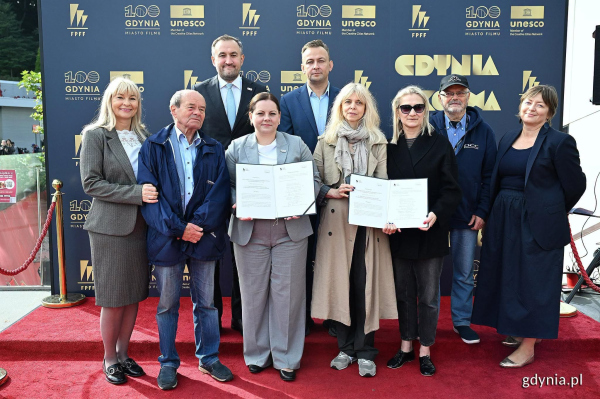 Srebrny Festiwal. FPFF dla osób starszych
 -
 Closing Gala of the 51st Polish Film Festival – photo report
 -
 RED CARPET – photo report
 -
 Day six of the 51st PFF – photo report
 -
 WINNERS OF THE 51ST PFF
 -
 What’s in store for today? SATURDAY
 -
 Festival Newspaper No 6
 -
 51st PFF Newsreel - Episode 5
 -
 Horror lies underneath
 -
 The Apostles of Rock’n’Roll.
 -
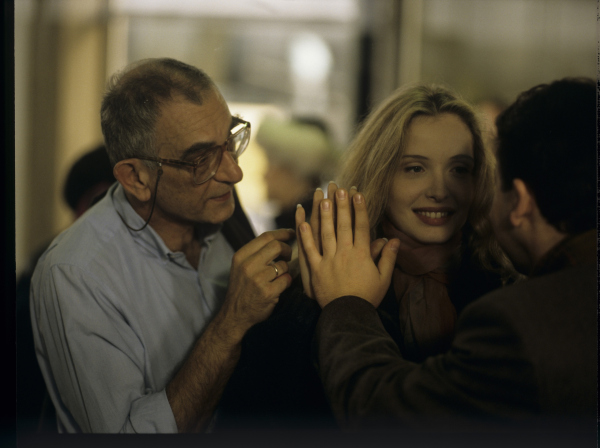 Notions of Intertextuality in the Cinema of Krzysztof Kieślowski
 -
 The architects of chaos. How do women backstage at the PFF save the celebration...
 -
 YOUNG GALA – photo report
 -
 Day five of the 51st PFF – a photo report on festival life and accompanying...


