
Weronika Petelczyc
Perhaps not every hero wears a cape – some wear a badge. They work on the front line, but also behind the scenes. They’re the ones who spend hours listening to the sound of tickets being scanned. They’re the ones who know by heart the standard phrase telling people where the nearest toilet is. They’re the ones who set up the festival site, count the audience numbers and help out at the help desks.
The festival’s volunteers – known by the fitting title of ‘boscy wolo’ (divine volunteers) – ensure that Gdynia becomes the capital of Polish cinema every year. Even if we see no hope in Polish cinema, it is worth recognising the people who tirelessly organise this film festival of their own free will, as volunteers.
The hard work begins several months before the festival week. That’s also when the first requirements come into play – confirming your availability well in advance, being organised, punctual and flexible, showing a willingness to help, and being ready to take on challenges. The reward for your efforts, for filling in the form conscientiously and making a good impression on the coordinators during the interview, is an email welcoming you to this year’s team of volunteers.
Although the team is joined by new members every year, it is characterised by the same trait at every edition – a willingness to work. Age, education and place of residence do not pose barriers, but rather build bridges between the diverse group of volunteers. Some have travelled hundreds of kilometres to reach the seaside capital of film. Some skip school to free up enough time to take on festival tasks (though, as they themselves admit, this is a double benefit). Still others come to volunteer whilst taking a break from looking after their grandchildren. Because a shared goal brings people of different generations together.
At the 51st Polish Film Festival, we have as many as 229 brilliant volunteers. The age range is quite broad. The youngest volunteer is 15, and the oldest is 77. It is a beautiful symbol of intergenerational cooperation.
The longest-serving volunteer is Mrs Iwona Soldenhoff, who is currently celebrating her festival anniversary. Ten years ago, she read an article in the Gdynia City Hall about the call for volunteers and asked herself one question: Why not? Ms Iwona jokes that she’ll carry on as long as she can run up the stairs. She emphasises that it’s not the chance to meet a famous actor or some prominent director that matters to her. The reason she’s returning to the festival for the tenth time is the seemingly ordinary people – the other volunteers. Everyone has their own story, plans and dreams. That’s why every conversation turns out to be surprising and exciting.
The festival is made up of people; the festival is, in fact, the people. Not just filmmakers, actors, producers, screenwriters and ‘film people’ in the broadest sense. The festival is also made up of people who devote their time to celebrating Polish cinema – even if it’s sometimes hard to believe. These are people who do not necessarily love our national productions unconditionally, but who look to the future of domestic filmmaking with hope. They are people who stand by Polish cinema through thick and thin. It is thanks to them that the spirit of cinema remains alive, and that successive generations of film-goers take up voluntary work.
Sandra Czerwińska, the volunteer coordinator, tells me about the ‘divine volunteers’ and the beginnings of her work.
How has the number of volunteers changed over the years of the festival?
The number has changed drastically. Right at the start, there were literally just a few people who helped organise the storeroom, moved boxes from place to place and packed goody bags for guests. Perhaps 10–15 people were involved in this. Then, as time went on, the number of volunteers began to grow steadily, because we also started giving them other, increasingly challenging tasks – from looking after visitors or providing information to working at the helpdesks, which were set up about 15 years ago, I think, as I remember being their first coordinator.
Volunteering is constantly evolving; we adapt to new needs. New departments have been created that didn’t exist at the start – such as social media. Over the years, staff in the various departments have realised that it’s great to have their own volunteers to help out, which is why their numbers are constantly growing. This year, it wasn’t just the social media department that was looking for new helpers; the accreditation department also opened its doors to volunteers.
Do many volunteers return to the festival in subsequent years?
Yes, over half of the people this year are ‘returning volunteers’. Around 120 people have already been with us during previous editions. The longest-serving volunteer is celebrating her festival anniversary this year – this is her 10th time with us. The second-longest tenure is 8 years, followed by 6. I see quite a few people here for the 4th or even 5th time. Another interesting fact is the number of office staff who were once volunteers at the festival. On Sunday, during the volunteers’ briefing with the festival management, everyone who had ever been a volunteer was asked to stand up. Twenty, perhaps twenty-five people stood up. Many members of the board have a background in volunteering. They swapped their orange badges (the colour of the volunteers’ badges) for black ones (the organisers’ badges).
What does it take to go from being a volunteer to a festival staff member? Is it a long and bumpy road?
You don’t have to be a star to get promoted this way. Take Pamela, for example, who’s currently handling accreditations at the festival; she’s now the independent accreditation coordinator and joined the team quite by chance – she was a volunteer and someone from our team posted in the group chat that a proofreader was urgently needed at the theatre. Pamela just happened to be passing by Empik; she bought a proofreader, brought it to the office, became a hero and was remembered for it. Later, I was looking for someone to help out and it was her I offered the job to. That’s how she ended up working with me first, and then she joined the Pomeranian Film Foundation on a permanent basis. Over time, she moved to the accreditation office and now holds an independent role, handling all accreditation for the festival, so she has access to the guest database. You don’t have to do anything extraordinary at all.
Your work begins long before the festival. What does the volunteer selection process look like? What factors come into play?
The selection process is very difficult. It’s painstaking work and often quite thankless, as we always have, on average, twice as many applicants as places available. Sometimes it’s hard to identify the right people. We make no secret of the fact that we prioritise those who’ve been with us before and proved themselves. They know what to do, where and how; they know the people and the people know them, which is important. Next, we consider the interview. We want to get to know our future volunteers at least a little. The interviews aren’t long – they last 10–15 minutes – but we’re able to tell from them whether someone speaks freely, whether they’re nervous, and whether they simply have a good grasp of reality. Apart from that, what counts is the desire to do an internship, particularly if someone is studying subjects related to film, media or culture in the broadest sense. This is a decisive factor, because, as we know, there aren’t many such organisations, which is why we offer this opportunity.
You often say to the volunteers: ‘There are over 200 of you, and only two of us.’ Is it difficult to manage such a large number of people?
Volunteers are a special group who come here of their own free will. They’re really excited to be here. I reckon I’ve got the best job at the whole festival, because I don’t have to deal with celebrities. I always joke that I’d rather coordinate the work of 200 volunteers and draw up a rota for 100 people than sort out the rota for my two children and the two grandmothers who look after them. Being a volunteer coordinator is a real pleasure. There are ups and downs, but those tricky situations are drowned out by a sea of positive moments, satisfaction and joy.
As long as there are people in the world who are willing to devote their time, skills and energy to celebrating Polish cinema, we need not worry about the future. Because cinema is not just about better or worse productions. It is not just a row over yet another controversial move by a director, nor a debate on the state of our national films, over which more than one patriot will shed a tear. Cinema is about people. The festival is about people.
-
 Gazeta Festiwalowa numer 7
 -
 Październikowe odsłony „50 na 51”
 -
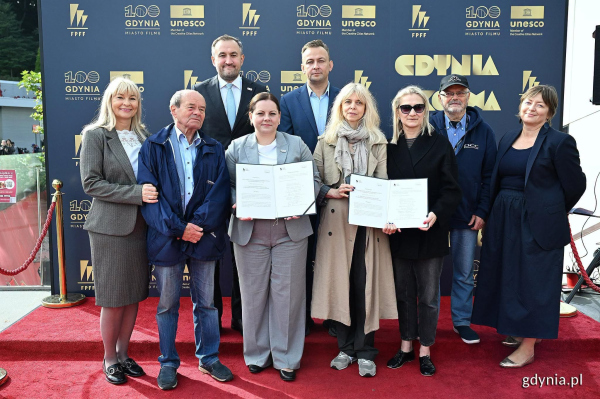 Srebrny Festiwal. FPFF dla osób starszych
 -
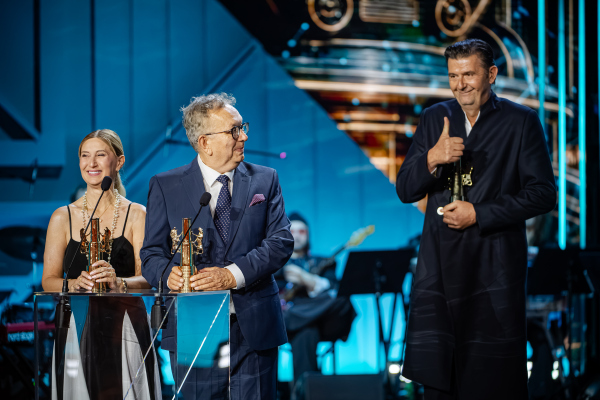 Closing Gala of the 51st Polish Film Festival – photo report
 -
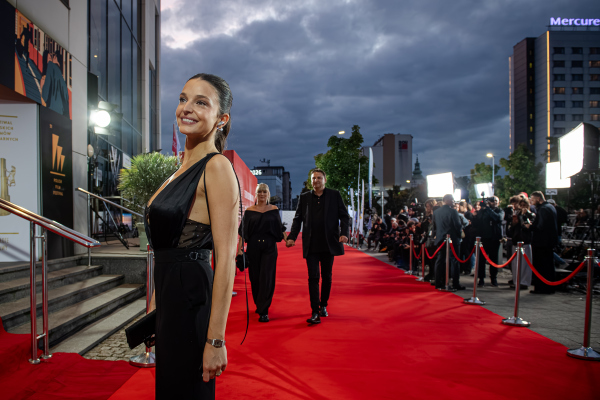 RED CARPET – photo report
 -
 Day six of the 51st PFF – photo report
 -
 WINNERS OF THE 51ST PFF
 -
 What’s in store for today? SATURDAY
 -
 Festival Newspaper No 6
 -
 51st PFF Newsreel - Episode 5
 -
 Horror lies underneath
 -
 The Apostles of Rock’n’Roll.
 -
 Notions of Intertextuality in the Cinema of Krzysztof Kieślowski
 -
 The architects of chaos. How do women backstage at the PFF save the celebration...
 -
 YOUNG GALA – photo report
 -
 Day five of the 51st PFF – a photo report on festival life and accompanying...


