
Isolated Individualism vs Communal Ubuntu (Interconnectedness) in Krzysztof Kieślowski’s Three Colours: Blue

FIPRESCI & Polish Film Festival Joint Publication on Krzysztof Kieślowski
The year 2026 marks the 30th anniversary of the great Polish director’s passing, and to honour his enduring artistic influence, FIPRESCI & Polish Film Festival prepared a special collection of seven essays written by international film critics associated with FIPRESCI. The publication aims to reflect on Kieślowski’s cinema and its continuing relevance for contemporary audiences, filmmakers, and critics around the world.
Martin Botha
South Africa
Krzysztof Kieślowski’s Three Colours: Blue is universally recognised as a masterpiece exploring individual liberty and grief. I viewed it for the first time 33 years ago in an arthouse cinema in Pretoria, South Africa. It was a year before the historic national elections, which ended the era of National Party rule and apartheid, with the promise of liberty for all South Africans. It became one of my top 10 all-time favourite films.
Since 2006 the film was part of my post-graduate course at the University of Cape Town about global auteurs including Bergman, Fellini, Angelopoulos, Wajda, Wertmüller, Tarkovsky and many more. I had the opportunity to discuss the film with students for more than 17 years. The course comprised an in-depth discussion on authorship and the great auteurs in film history such as Kieślowski. We engaged with the material through detailed formal analysis as well as through an exploration of central debates and issues in film theory.
Debates about auteurism in the cinema occupied a privileged position in film studies from the 1950s until the early 1980s. The course focused on the development of auteur theory from the fifties till the present day. Authors in mostly European cinema served as case studies. According to various scholars the film author is not only the most important symbol of European cinema's cultural tradition and commitment but is also a crucial part of Europe's efforts to develop its cinema within domestic and international film industries.
We also studied authorship in the 21st Century. Once heralded and defined by the likes of François Truffaut and Andrew Sarris as a romantic figure of aesthetic individualism, the auteur was reinvestigated in our course through a novel approach. Bringing established as well as emergent figures of world art cinema to the fore, our course demonstrated how politics and philosophy are present in the works of these important filmmakers. They can be still seen leading a fight that their glorious predecessors seemed to have abandoned in the face of global capitalism and the market economy. A new world calls for a new cinema, and thus for new auteurs. “Covering a range of global auteurs such as Abderrahmane Sissako, The Global Auteur provides a much-needed reassessment of the film auteur for the global age” (Seung-hoon Jeong & Jeremi Szaniawski 2016). It also means to use a diversity of approaches to auteur studies.
Kieślowski’s work is multivocal – many-voiced, that is, with inexhaustible meanings, which have been analysed by many scholars including Slavoj Zizek (2001), Marek Haltof (2004) and Annette Insdorf (2013).
From a South African perspective, the themes in Three Colours: Blue resonate deeply within a society transitioning from the collective trauma of apartheid to the heavy emotional and ethical responsibilities of hard-won political freedom. My analysis of the film attempts to uncover significant parallels between individual emotional trauma and a nation’s collective socio-political journey. While Kieślowski intended the film to interrogate the French Revolutionary ideal of liberty on a deeply personal level, its themes of grief, forced reinvention, and the impossibility of absolute detachment resonate heavily with South Africa's post-apartheid narrative.
The Three Colours trilogy has been actively utilised within South African philosophical and art discourses to navigate local complexities. Notably, South African academic Bert Olivier (2002; 2025) has written extensively on Kieślowski's trilogy. Olivier applies the hermeneutics of Hans-Georg Gadamer as articulated in Truth and Method (1982) to argue that Three Colours: Blue demonstrates that absolute individual autonomy is an illusion. His work highlights that human relationships require navigating shared power and mutual vulnerability — a core component of South Africa's ongoing reconciliation process.
My argument in the essay explores the paradox of individual freedom vs. social responsibility. Kieślowski frames his film around the question: Is it possible to have true liberty without love? After losing her family in a tragic crash, Julie (Juliette Binoche) seeks total, isolating freedom by severing all attachments, but she ultimately realises that true freedom requires connection and responsibility to others. In the film, Julie (Juliette Binoche) attempts to survive an unimaginable tragedy by cutting all ties with her past, selling her estate, and choosing total isolation. She treats her life as a blank slate to escape pain (Olivier 2002). For Julie her life seems to be utterly meaningless when she regains consciousness in hospital after a car accident. She learns from medical personnel that neither of the other members of her family has survived the accident. So devoid of meaning everything appears, in fact, that she attempts to commit suicide by stuffing a handful of pills into her mouth – only to find herself unable to swallow them. After discovering her inability to end her own life, Julie decides to withdraw from society, from friends and acquaintances, as well as from all forms of responsibilities. Julie is determined to liberate herself from all previous ties (Olivier 2002).
Then she looks for an apartment in a part of Paris where no one knows her, she sets out to live a reclusive life. She cannot refrain from taking something from her former life with her – a beautiful ornament consisting of pieces of glass in various shades of blue. According to Olivier (2002) this serves as a visual reminder that she is unable, try as she may, to divorce herself completely from her past memories. It captures, visually and chromatically, the significance of the colour blue. It is a colour of sadness, of melancholy, but it also connotes truth, as well as spirituality. Olivier (2002) argues that the blue ornament signifies the fusion, for Julie, of sadness, in the face of loss, with the beauty and truth of her memories of her lost ones. It also signals the truth about her inability to free herself from the things that constitute the material world.
Kieślowski uses the colour blue to challenge the notion of absolute liberty. Julie initially seeks freedom from memory, responsibilities, and love. Ultimately, this brings her an empty, cold existence. She only finds true liberty when she embraces the freedom to connect, love, and finish her late husband's Concerto for the Unification of Europe.
For South Africans, this theme mirrors the tension between the country's macro-level political liberation and the micro-level realities of personal and community healing. Like Julie's initial instinct to withdraw from a world that inflicted pain, the "rainbow nation" has frequently grappled with the tension between individual autonomy, moving on from a traumatic past, and the collective obligations of societal reconciliation. This mirrors South Africa’s transition in 1994. The dawn of the "rainbow nation" initially brought a strong desire to look only forward and sever connections with a painful past. Just as Julie learns that her history, unfinished music, and human attachments cannot simply be erased, South Africa continues to learn that collective trauma, systemic inequality, and historical memory cannot be bypass-edited out of the national consciousness.
In South Africa, the constitutional achievement of political liberty (freedom from tyranny) was only the first step. The ongoing national struggle is defining how to achieve substantive liberty — the socio-economic freedom to thrive, which relies heavily on communal Ubuntu (interconnectedness) rather than isolated individualism. Julie slowly abandons her self-imposed alienation to embrace the love of the people around her. This reflects the South African philosophical concept of Ubuntu (the idea that "I am because we are"), directly challenging the Western idea of freedom as mere detachment from others.
Kieślowski explored interconnectedness as a spiritual and structural theme, focusing on invisible emotional bonds, shared human experiences and fate. He focuses on how shared vulnerabilities – like universal feelings of love, fear and suffering unite people across time, space and cultures. He believed that despite cultural, historical or political divisions, basic human experiences such as pain or fear are universal and bind everyone together (Stok 1993).
His films feature parallel storylines, coincidences and mirroring lives, suggesting that a larger, unseen order influences human relationships. Films such as Blind Chance and The Decalogue explore how seemingly random accidents or tiny decisions can radically alter destinies, demonstrating the fragility of connection. The interconnected lives of characters across Blue, White and Red, visually and thematically demonstrate fraternity and the possibility of cosmic connection. In The Double Life of Véronique Kieślowski explores a deep, inexplicable psychic and spiritual bond between two identical strangers who never actually meet. Kieślowski believed that there are too many things in the world which divide people such as religion, politics, history, nationalism... Feelings are what link people together (Stok 1993).
To broaden Bert Olivier’s analysis I have included work by Professor Thaddeus Metz, a prominent philosopher at the University of Pretoria, who revolutionised African philosophy by translating the traditional southern African concept of Ubuntu into a rigorous, analytic moral theory through a seminal work like Ubuntu as a Moral Theory and Human Rights in South Africa (2011).
Metz systematically structured Ubuntu to serve as a comprehensive, single-principle framework capable of rivaling dominant Western ethical frameworks like Kantianism and Utilitarianism. Western ethical frameworks often prioritise individual autonomy (Kantianism) or individual pleasure/welfare (Utilitarianism). In contrast, Metz’s formalised formulation of Ubuntu argues that an action is right if and only if it promotes, respects, or honors harmonious (communal) relationships, and wrong insofar as it creates discordance
He breaks down this harmony into two distinct, interdependent psychological and behavioural pillars:
Identity (Shared Way of Life): The psychological sense of togetherness where people think of themselves as a collective "we," thus coordinate their behaviours, and work toward cooperative goals.
Solidarity (Mutual Care): The behavioural act of assisting others and showing sympathetic emotional care for their quality of life, acting for the other person's sake rather than out of pure self-interest.
Together, Metz defines identity and solidarity as the foundational requirements for friendliness or love in human interaction
Metz argues that Ubuntu functions as a "self-realisation" ethic. While humans are biologically human at birth, our moral purpose is to earn or achieve true personhood (Ubuntu) through our treatment of others by cultivating communal virtues such as compassion, generosity, hospitality, and forgiveness (Metz 2011)
Critics historically argued that Ubuntu was too collectivist and could easily justify abusing individual rights for the sake of the majority. Metz resolved this in Ubuntu as a Moral Theory and Human Rights by introducing a relational conception of human dignity.
Human beings possess inherent dignity not merely because they can reason, but because of their innate capacity to commune with others. Metz (2011) notes that Ubuntu mandates a focus on reconciliation, public apology, and reparations to mend broken relationships, a philosophy visible in South Africa's post-apartheid Truth and Reconciliation Commission.
In Three Colours: Blue, Julie connects with others by gradually surrendering her absolute emotional isolation in exchange for the messy, unavoidable realities of human relationships. After losing her husband and daughter, she initially seeks complete "liberty" by cutting all personal ties, selling her possessions, and moving to an anonymous apartment in Paris. However, her journey shifts from cold detachment to emotional re-engagement through specific individuals and shared experiences. Julie initially tries to destroy her late husband's unfinished European unity concerto. When his assistant, Olivier, attempts to finish it from a copied draft, Julie chooses to actively collaborate with him. Completing the music becomes a profound creative and emotional connection that pulls her back into the land of the living.
While trying to isolate herself, Julie encounters a flautist playing the exact melody of her husband’s concerto on the street. This moment shows her that art and memory are public, uncontainable forces that keep her tethered to the outside world,
Julie moves to an apartment building that explicitly bans children, seeking a sterile environment. She befriends Lucille, a sex worker who lives downstairs and is shunned by the other tenants. By refusing to judge Lucille and granting her authentic empathy, Julie establishes an unofficial confidante relationship born out of mutual isolation.
Julie discovers that her late husband had a long-term affair and that his mistress is pregnant with his child. Instead of reacting with bitter jealousy, Julie tracks Sandrine down, treats her with immense grace, and gives her her late husband's old family home so the child can grow up with his name.
Olivier has long been secretly in love with Julie. Initially, she sleeps with him purely to sever his attachment to her, but by the end of the film, she accepts his genuine care. The final sequence shows her crying against glass while making love to him, signaling that she has finally allowed herself to feel both grief and affection simultaneously.
A young boy who witnessed the fatal car accident tracks Julie down to return a cross necklace he found at the scene. Meeting Antoine forces her to confront the physical reality of her trauma rather than burying it.
The film's famous closing montage weaves all these characters together visually while the finished choral anthem plays, underscoring that Julie's ultimate freedom is found not in isolation, but through her capacity to love and be connected. In the final sequence interconnectedness acts as the ultimate antidote to isolation, structurally proving that absolute individual liberty is an impossible and punishing illusion. The five-minute climactic montage—often called the "coda"—visually and aurally binds her to the surrounding world, As the music swells, it bridges different physical spaces, uniting disparate characters under a single, grand melody. The choir sings St. Paul’s First Epistle to the Corinthians (specifically verses on love). The line "If I have not love, I am nothing" delivers the narrative verdict: human liberty without love and attachment is empty and unsustainable. The sequence moves through a continuous, sweeping pan that dissolves barriers of time and space. It weaves together a specific tapestry of people who have inadvertently anchor-dropped Julie back into reality. The montage begins and ends with Julie, framing the entire human network as if it is existing directly inside her consciousness.
By closing Blue on a note of collective human entanglement, Kieślowski lays the groundwork for the next two films. He transitions the theme from personal liberty (Blue) toward mutual equality (White) and absolute fraternity (Red), suggesting that none can truly exist without the others. In the final frame, the blue light—which originally symbolised cold, debilitating grief—refracts gently across Julie's face. As a single tear falls, her mouth quirks into a tiny, almost imperceptible smile. She has surrendered her isolation, accepting that to be alive is to be fundamentally entangled with others.
Julie’s experiment with radical independence ultimately fails because humanity refuses to let her exist in a vacuum. In perfect alignment with Ubuntu—which dictates that our humanity is realised through relationships with others—external lives constantly break through her isolation: The neighbor (Lucille), seeking companionship and validation, whom Julie chooses to help rather than ignore. Olivier, who forces her to confront her emotional and creative identity. Julie discovers her husband had a pregnant mistress; instead of turning away, she gives the woman her late husband's house, acknowledging their shared human link.
True liberation for Julie does not come from escaping society, but from re-entering it. Kieślowski uses Zbigniew Preisner’s haunting musical score to represent the lingering, inescapable pulse of her human bonds. By the climax, Julie accepts that she cannot heal alone. Her ultimate act of freedom is completing her husband's unfinished Song for the Unification of Europe—a piece explicitly celebrating unity, love, and human togetherness. The music functions as an invasive, inescapable repository of memory and trauma that systematically thwarts the protagonist's attempts at emotional isolation. The brilliant, metadiegetic score renders her psychological erasure impossible, acting as a sensory manifestation of grief that forces her to remember.
Unlike conventional film scores that passively manipulate audience emotion, the music in Blue exists primarily inside Julie’s mind. While Julie can physically throw away her husband's papers or sell her estate, she cannot lock out her auditory memory. Fragments of the unfinished Concerto for the Unification of Europe suddenly explode into her consciousness without warning. Kieślowski visually mirrors this internal musical hijacking by abruptly freezing the narrative action, flooding the screen with heavy blue lighting or fading completely to black while thunderous orchestral chords erupt. These moments operate as sensory flashbacks, proving that her trauma is pre-verbal and deeply embedded in her mind. Ultimately, the music evolves from a punishing reminder of death into a vehicle for healing and personal rebirth.
Because Julie is a composer dealing with the sudden loss of her musician husband, music acts as the catalyst that returns her to the world, South African audiences and creators have long utilised the arts—whether through literature, theatre, or visual arts — as a medium to process historical trauma and push through emotional blockades.
Music has served as a vital vehicle for collective healing, mourning, and historicising the immense trauma left by decades of state-sanctioned racial oppression. By bridging the gap where language or formal justice fell short, sonic expression allowed citizens to process unquantified grief and preserve the memories of those lost. During apartheid, funerals for activists targeted by the regime doubled as political rallies where freedom songs transformed private devastation into communal solidarity. In the post-apartheid era, these same melodies—such as the mournful yet defiant Senzeni Na? ("What have we done?")—continue to be sung to collectively externalise the historical pain of loss.
The physical act of group singing provides a shared psychological release. The harmonised structures of choral arrangements offer a safe framework to house intense emotions like grief, trauma, and anger that words alone cannot fully capture. Post-apartheid compositions, such as classical vocal cantatas or jazz arrangements, routinely sample the testimonies of grieving mothers from the Truth and Reconciliation Commission (TRC). These works integrate classical Western musical devices for weeping (like the pianto semitone) with traditional African mourning structures to give a public voice to previously hidden tragedies. Apartheid purposely fractured communities along racial and tribal lines. Post-apartheid musical genres focused heavily on cultural reclamation as a way to heal that structural loss.
Our national anthem, for example, combines the anti-apartheid liberation hymn (Nkosi Sikelel' iAfrika) with the old apartheid-era anthem (Die Stem van Suid-Afrika). Bringing these two opposing songs together forced a musical and cultural handshake between former adversaries. No single group had to entirely give up their musical heritage; instead, they created a shared asset. The anthem features five of South Africa's most widely spoken languages in a single song. It seamlessly transitions through isiXhosa, isiZulu, Sesotho, Afrikaans, and English. To sing the anthem fully, citizens must pronounce languages outside their own mother tongue. This act builds deep cultural empathy. The opening section (Nkosi Sikelel' iAfrika) translates to "God Bless Africa," focusing on communal well-being rather than individual triumph. The Sesotho section explicitly asks to "vanish wars and distress" and "save our nation," prioritising peace and togetherness.
The South African National Anthem and the philosophy of Ubuntu are fundamentally interconnected as dual symbols of the nation's post-apartheid reconciliation, unity, and shared humanity. By stitching together the songs of both the oppressed and the oppressors, the anthem became a masterclass in compromise, forgiveness, and mutual recognition. When South Africans sing the anthem, the collective protocol expects citizens to sing every verse regardless of their native tongue. Acknowledging and speaking another person's language is a core tenet of Ubuntu, as it signals that you truly see and value their humanity.
The connection between Three Colours: Blue, and Ubuntu ("I am because we are") centres this article on a critique of radical, isolated individualism. I used Ubuntu as a framework to explain how the film rejects absolute personal isolation in favour of human interconnectedness.
Martin Botha – current position: Emeritus Associate Professor, Media and Film Studies, Centre for Film and Media Studies, University of Cape Town. Dr Martin Botha published more than 300 articles, reports and papers on the South African media, including seven books on South African cinema, namely Images of South Africa: the rise of the alternative film (1992), Movies Moguls Mavericks: South African cinema: 1979-1991 (1992), Kronieken van Zuid-Afrika: de films van Manie van Rensburg (1997), Jans Rautenbach: Dromer, baanbreker en auteur (2006), Marginal Lives and Painful Pasts: South African cinema after apartheid (2007), South African Queer Cinema 1985 – 2023 (2024) and South African Cinema 1896 – 2010 (February 2012). The book has been translated in Arabic and launched at the 2013 Luxor African Film Festival. His publications have also been translated in French, Dutch, Italian, German, Spanish and Portuguese.
References
Gadamer, H. (1982) Truth and Method. New York: Seabury Press.
Haltof, M. (2004) The Cinema of Krzysztof Kieślowski – Variations on Destiny and Chance. London: Wallflower Press.
Insdorf, A. (1999) Double Lives, Second Chances: The Cinema of Krzysztof Kieślowski. New York: Hyperion Books.
Jeong, S. & Szaniawski, J. (Eds.) (2016) The Global Auteur: The Politics of Authorship in 21st Century Cinema. New York: Bloomsbury.
Metz, T. (2011) Ubuntu as a Moral Theory and Human Rights in South Africa. African Human Rights Law Journal 11(2), pp. 532 – 559
Olivier, B. (2002) Kieślowski’s film trilogy: Three ColoursBlue, White and Red: The colours of life. South African Journal of Art History 17, pp. 120 – 139.
Olivier, B. (2025) C.S. Lewis’s The Four Loves and Kieślowski’s Three ColoursBlue, White and Red. South African Journal of Art History 40(1) Available at
Stok, D. (ed) (1993) Kieślowski on Kieślowski. London: Faber and Faber.
Zizek, S. (2001) The Fright of Real Tears: Kieślowski Between Theory and Post-Theory. London: British Film Institute.
Filmography
Blind Chance (1981)
The Decalogue (1988)
The Double Life of Véronique (1991)
Three Colours: Blue, White, Red (1993-1994)
-
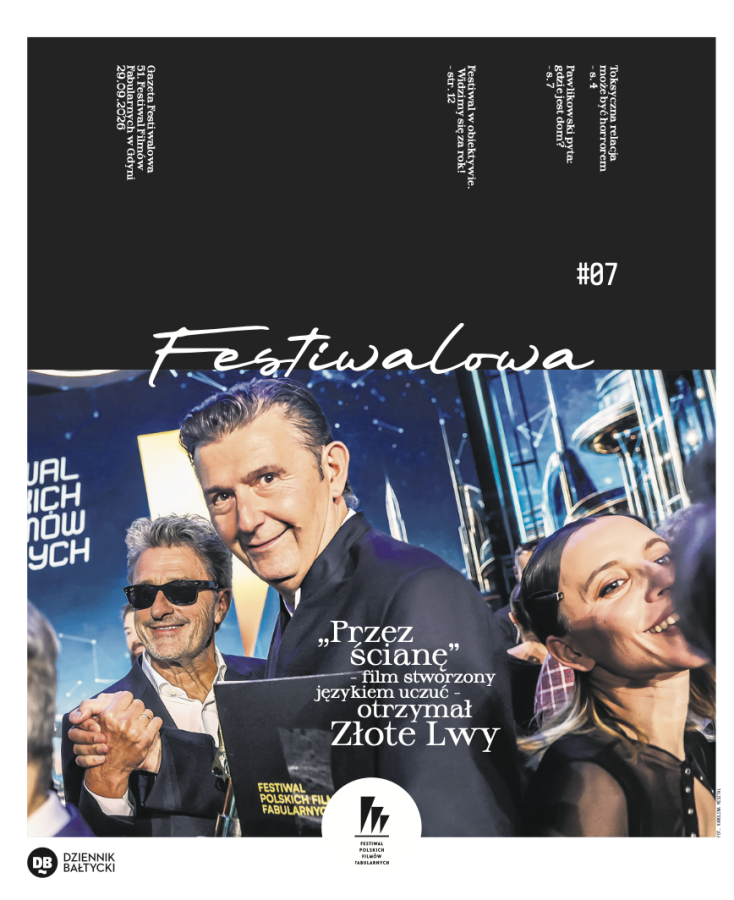 Gazeta Festiwalowa numer 7
 -
 Październikowe odsłony „50 na 51”
 -
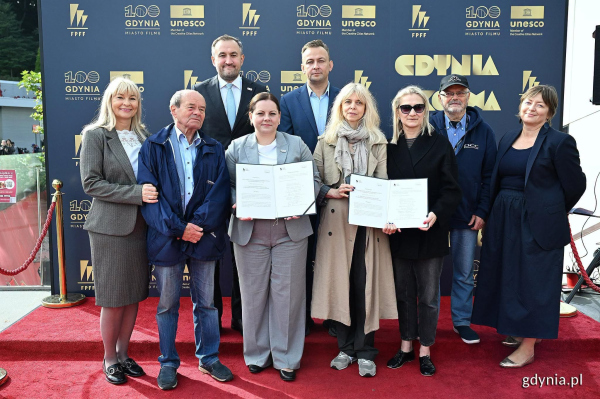 Srebrny Festiwal. FPFF dla osób starszych
 -
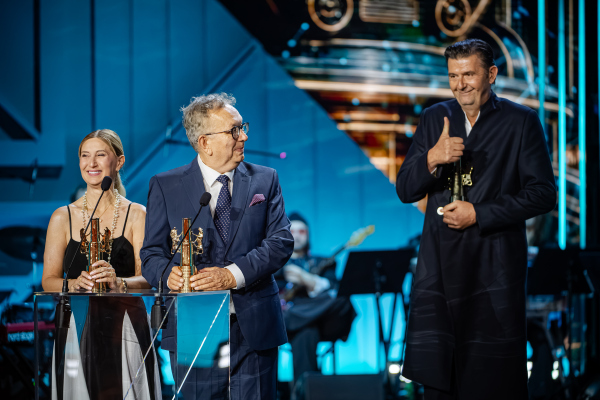 Closing Gala of the 51st Polish Film Festival – photo report
 -
 RED CARPET – photo report
 -
 Day six of the 51st PFF – photo report
 -
 WINNERS OF THE 51ST PFF
 -
 What’s in store for today? SATURDAY
 -
 Festival Newspaper No 6
 -
 51st PFF Newsreel - Episode 5
 -
 Horror lies underneath
 -
 The Apostles of Rock’n’Roll.
 -
 Notions of Intertextuality in the Cinema of Krzysztof Kieślowski
 -
 The architects of chaos. How do women backstage at the PFF save the celebration...
 -
 YOUNG GALA – photo report
 -
 Day five of the 51st PFF – a photo report on festival life and accompanying...


