
Julia Łukaszek talks to Paulina Pohl-Pluta about how the approach to accessibility has evolved at the Polish Feature Film Festival, what measures are being introduced today, and why accessibility remains an ongoing process.
Julia Łukaszek
Julia Łukaszek: Let’s start with the very concept of accessibility. What does organising an accessible festival actually mean to you?
Paulina Pohl-Pluta: Accessibility is a very broad concept. It often brings to mind associations with disability and ensuring access to places or services for people with special needs. I see it in slightly broader terms. I’m drawn to the idea that accessibility actually concerns everyone, because each of us faces different challenges. Accessible culture is one in which everyone has an equal opportunity to enjoy it. In Gdynia, accessibility naturally relates largely to the cinema. The aim is to ensure that anyone who wants to take part in the festival has the opportunity to do so. That’s why we have accessible auditoriums with spaces for wheelchair users, screenings with extended subtitles, and solutions for people with hearing impairments. Another major feature this year is the number of films available with audio description.
Do you notice any changes compared to previous editions of the festival in the way accessibility is approached and organised?
Yes. We are learning, and year on year there are more and more facilities, but above all, our perspective is changing. We do not want to organise performances for a closed, invited group of people with disabilities. Such a practice may have been necessary at a certain stage in the history of accessible events, but today we are aiming for something different.
Accessibility is an integral part of the festival’s programme. There are 16 films in the main competition, and we are endeavouring to ensure that as many of them as possible can be viewed with subtitles and audio description, and that they are screened in a variety of venues where people with different needs can find a seat that suits them to a greater or lesser extent.
I’m glad that accessibility isn’t a separate tab on the website dedicated to some ‘other’ group, but is instead an integral part of the festival’s ethos. I think this is a process – more and more is being done, and this distinction will likely continue to blur, so that it ceases to be something special and instead becomes standard practice in organising cultural events in Poland.
Proof that things can be different is provided by the work of the Kino Dostępne Foundation. They’ve created a brilliant app that anyone can download onto their phone. It features audio descriptions of films. I select a film in the app, go to the cinema, take my phone and headphones with me, and the signal from the screen synchronises with the audio description channel. So I can listen to an additional description.
Last year, if I remember correctly, the app had around 15,000 page views. So we’re not talking about a few dozen or a few hundred people, but about solutions that are genuinely needed.
What actually triggered these changes, both in terms of the thinking behind them and their implementation at the festival?
I think these are all somewhat interconnected. Generally speaking, even on a global scale, attitudes are changing and we’re talking more and more about what’s known as universal design – whether in the context of architecture, events, or simply how people function in public spaces. It’s about an approach where we try to design services and experiences, and create places that everyone can easily use. There are more people with disabilities around – both in everyday public spaces and in terms of their representation in culture. It’s still not perfect, but progress is being made.
The second issue is the development of technologies that greatly facilitate accessibility solutions. The ‘Kino Dostępne’ app is a prime example. This tool was developed in recent years and has truly changed the way audio description is perceived.
This year, for the first time, the festival is also presenting an award for ‘Audio Description of the Year’. These are films that were in cinema distribution last year and featured audio description via the app. The jury, as well as an audience comprising blind people, selected the best audio descriptions. This shows that audio description is also a form of art in its own right and a new way of watching and listening to films.
So I think that new technologies, along with greater visibility and representation of people with disabilities, mean that at an event as large as ours, it is impossible not to think about accessibility. I can see this happening at other festivals too, and I think it will become increasingly widespread.
And what does the process of introducing new solutions actually look like? Is there a point at which you sit down and think about what needs to be changed?
I think this is the result of collaboration. The first step is certainly raising awareness. Here, Agata Kozierańska-Burda, the festival director, and Asia Łapińska are the driving force behind it all; they were the ones who said: ‘Hey, we’re ready for this’ – ready to invest time, hire the right people, form the right partnerships and look for ideas on how to transform the festival.
We have several institutions and organisations that are helping us with this and know the subject inside out. These are the organisations we, as a festival, can turn to in order to work together. But it has to start with goodwill and the realisation that this is a matter of great importance.
So is there a point at which you can say, ‘the festival is now accessible’? Or is it more of a process that never ends?
I think it is a process. Every year we take another step forward, but at the same time new technologies are emerging and new needs are arising. There is also increasing discussion about the needs of neurodiverse people, and I think this is a topic we will explore further in the future.
We need to be vigilant and keep our ears open to what needs are emerging, so that we can all watch and enjoy films. The point is that it shouldn’t come down to a decision like: ‘I want to come to the festival, I want to watch films, I want to be here – I can, or I can’t’. That’s the key thing for me.
Do you have any ideas you’d like to implement in the next edition?
I think it would be a huge dream if all films in all competitions were available with audio description and if as many films as possible had extended subtitles. That’s our main focus.
But I also think that, with this openness, we’ll see what the world brings, and we’ll strive to make the festival as welcoming a space as possible for everyone.
-
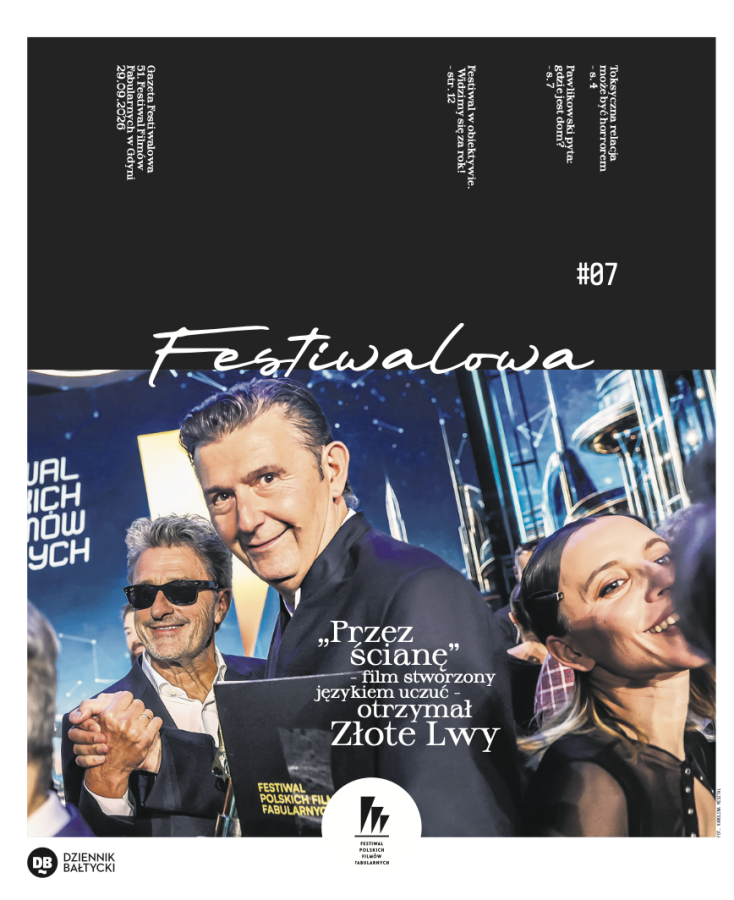 Gazeta Festiwalowa numer 7
 -
 Październikowe odsłony „50 na 51”
 -
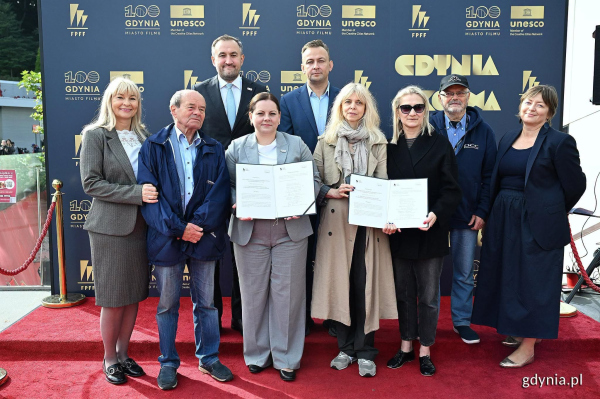 Srebrny Festiwal. FPFF dla osób starszych
 -
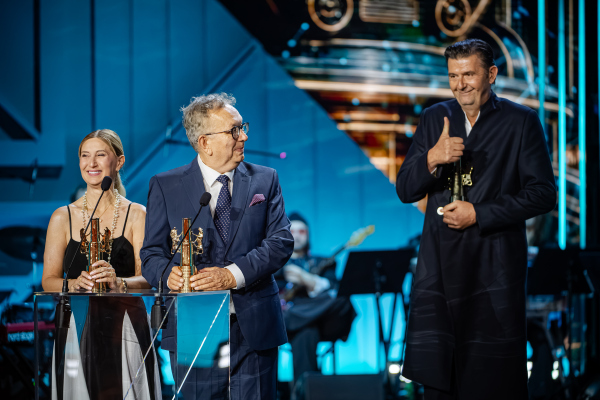 Closing Gala of the 51st Polish Film Festival – photo report
 -
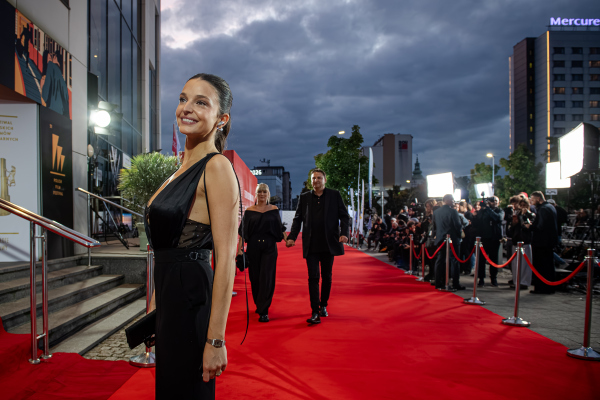 RED CARPET – photo report
 -
 Day six of the 51st PFF – photo report
 -
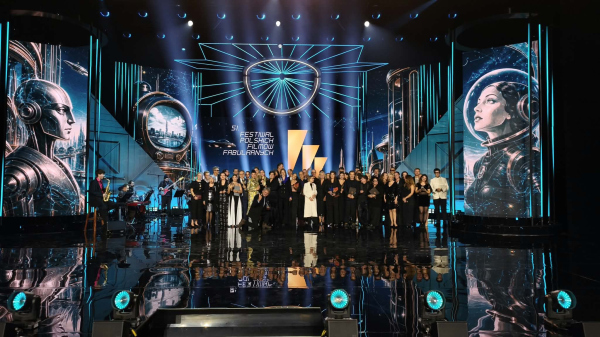 WINNERS OF THE 51ST PFF
 -
 What’s in store for today? SATURDAY
 -
 Festival Newspaper No 6
 -
 51st PFF Newsreel - Episode 5
 -
 Horror lies underneath
 -
 The Apostles of Rock’n’Roll.
 -
 Notions of Intertextuality in the Cinema of Krzysztof Kieślowski
 -
 The architects of chaos. How do women backstage at the PFF save the celebration...
 -
 YOUNG GALA – photo report
 -
 Day five of the 51st PFF – a photo report on festival life and accompanying...


