

FIPRESCI & Polish Film Festival Joint Publication on Krzysztof Kieślowski
The year 2026 marks the 30th anniversary of the great Polish director’s passing, and to honour his enduring artistic influence, FIPRESCI & Polish Film Festival prepared a special collection of seven essays written by international film critics associated with FIPRESCI. The publication aims to reflect on Kieślowski’s cinema and its continuing relevance for contemporary audiences, filmmakers, and critics around the world.
Malik Berkati
Germany
I. A Turning Point in the Reception of a Cinema
There is something inherently elusive about identifying what separates a good film from a great one — the kind of work that becomes a watershed, retrospectively revealing its director as one of cinema's masters. A distinctive signature is certainly part of it, yet it doesn’t fully explain why certain films keep resonating across decades, generations, cultures and continents, while others — equally accomplished — remain prisoners of their own moment.
When The Double Life of Véronique premiered in 1991, winning both the FIPRESCI Prize and the Best Actress award for Irène Jacob, most Western European audiences discovered Krzysztof Kieślowski's cinema for the first time. A circle of cinephiles already knew his documentaries and, above all, Dekalog (1988) — the monumental series produced for Polish television and partly co-produced with West Germany. But it was the international success of Véronique, followed by the Three Colours trilogy (1993–1994), that transformed his global reputation, casting a retroactive light onto Dekalog and allowing it to be recognised, beyond specialist circles, as one of the defining achievements of European screen fiction.
Before the fall of the Wall, Europe's divisions were not only geopolitical — they were cinematic. Films barely circulated across the Iron Curtain; Western distribution of Eastern European cinema remained marginal, filtered through festivals and cinémathèques rather than commercial release. Shot in the immediate aftermath of 1989, Véronique emerged from a period of vertiginous uncertainty — political, economic, existential. Kieślowski could not have known how events would unfold, which may explain why the film never addresses the transition directly and remains atmospheric rather than declarative. Véronique became a way of returning Poland to the Western European cinematic imagination and of doing so aesthetically, refusing the reductive image of a grey, joyless country under a leaden sky.
II. A Post-Cold War Passage: Aesthetics, Industry and a National Cinema Reimagined
The Double Life of Véronique stands as a hinge between Kieślowski's Polish cinema and the Three Colours trilogy — a trilogy that borrows the French republican motto while unfolding across France, Poland and Switzerland, composing a fresco of early-1990s Europe still haunted by the Wall's collapse, by the simultaneous porosity and rigidity of borders, and by the confrontation between a liberal West convinced of being on the right side of history and a transition-era East suspended between hope and uncertainty.
The chromatic signature devised by cinematographer Sławomir Idziak plays a decisive role in this repositioning. A golden-green light bathes the film, punctuated by recurring red accents — a sweater, an armchair, a wall, a satchel, a scarf — functioning as sensory beacons that connect the two women, creating a chromatic resonance of shimmer and reflection. This warmth sharply contrasts with the "grey of the real" then associated with Polish cinema. The golden light creates a crepuscular effect—suspended between dawn and dusk—that serves as a sensory correlative for a world defined by its inherent uncertainty: individual as much as collective, political as much as economic.
Even the film's international title reveals the prejudices it first had to overcome. The screenplay was originally called La Choriste ("The Chorus Singer") — a title Kieślowski abandoned once he understood its resonance in France: "In France, this word evoked negative associations. I heard the following remark: 'My God, another Catholic film from Poland!' In other words: nobody would go see this film," he recalls in his autobiography. The anecdote is telling: in miniature, it encapsulates precisely the prejudice the finished film would go on to dismantle.
Production itself mirrored this transitional moment. While Kieślowski’s plans for multiple market-specific endings were largely abandoned, two versions persist. The American cut adds explicit narrative closure regarding Véronique’s father, whereas the original concludes with her hand resting on a tree—a contrast that serves as a parable for the film’s transnational passage: an Eastern European sensibility, elliptical and suggestive, negotiating its entry into Western commercial cinema without ever fully surrendering its own grammar of ambiguity. This negotiation also reflects the emerging logic of European co-production in the early 1990s, in which compromise and market accessibility became structural conditions of circulation—a logic that has only intensified over time, cementing these compromises as the very foundation of contemporary co-production practices."
III. Irène Jacob: The Last Face of Kieślowski's Cinema
If Véronique effected this passage between two cinematic worlds, it did so through a face: that of Irène Jacob — Swiss and French — who became, and remains, the enduring embodiment of Kieślowski's late artistic identity, from Weronika and Véronique to Valentine in Three Colours: Red. She was, in every sense, the last cinematic face Kieślowski chose before completing his final trilogy and, shortly thereafter, his untimely death.
She recalls her first encounter with his cinema in terms that already carry the flavour of a small miracle of circulation across the Iron Curtain: "I had the good fortune of seeing A Short Film About Love in a cinema, but I never imagined I would meet a Polish filmmaker. The Iron Curtain was still there; East–West collaborations were still rare. When the casting happened, there were several actresses under consideration, but at the time it was difficult simply to see films, so it was pure chance that I had seen his."
She also remembers how Kieślowski described his intentions for the project that would become Véronique: "He had made many male roles, and female ones as well, but for the first time he had a young woman as protagonist. He told me: 'I would like to make a film about premonitions, about sensations, about the fact that sometimes we feel deeply accompanied in life, and sometimes we feel abandoned. What is this feeling of accompanied solitude? These invisible intuitions that don't belong to everyday conversation? What interests me is finding a way to film what is not visible."
For Jacob, this makes Kieślowski, above all, "the filmmaker of the invisible and the intimate," a director possessed of "a profoundly poetic vein" who nonetheless insisted that poetry had to remain embodied if it was to touch something tangible. She also recalls that he edited fifteen different versions of the film — "the first time that had ever happened to him" — the mark of a director still searching rather than executing a preconceived design. That creative restlessness may explain why the film continues to be received, across decades, "in such a personal and singular way" by each new generation of spectators.
IV. Sehnsucht, Doppelgänger, and a Continent in Suspension
The premise of The Double Life of Véronique rests on an elementary symmetry. Weronika in Poland and Véronique in France share almost everything—they sing, they are young, they each have a loving father but no mother—yet they remain unaware of each other's existence, while somehow linked by something deeper than resemblance. What emerges is not knowledge but instinct: a presence, an intuition of relation and of loss, without the capacity to name what has been lost. This is a film built on sensation rather than exposition. Kieślowski's cinema privileges signs, echoes and correspondences over explanation, inviting spectators to construct meaning for themselves.
This emotional condition can be read through the German concept of Sehnsucht. This untranslatable blend of longing, nostalgia, and spiritual yearning forms the film’s emotional core. Reaching as much toward an unrealized future as a lost past, it encapsulates the 1990s European Zeitgeist: a fractured continent, divided yet bound. The film translates this geopolitical upheaval into intimate sensation, most poignantly when Véronique photographs Weronika amidst a Solidarność demonstration. In this moment, while Weronika glimpses her double, Véronique—absorbed in the act of capturing the image—remains blind to her, a mirror held to continental history that simultaneously reflects the protagonist’s own existential uncertainty.
Jacob extends the scene beyond its historical moment: "Today we take so many photographs of everything that we no longer see anything... Véronique takes the photograph, and later in her life realises she saw nothing. By extension, she wonders whether she has, after all, missed her own life."
The observation resonates far beyond the film itself. It suggests a modern condition in which recording increasingly replaces seeing. The image becomes an end in itself, while history—and perhaps life itself—slips past unnoticed.
Within this framework, the notion of the Doppelgänger itself requires recalibration. This is not the threatening double of Dostoevsky's The Double or Hoffmann's The Devil's Elixirs—the double as usurper or rival. It is, rather, an ontological double: a divided self projected across a divided Europe, where the death of one mysteriously allows the other to continue living, feeling and searching. It is a Doppelgänger founded on invisible solidarity rather than conflict.
Kieślowski develops a coherent optical vocabulary—spheres, mirrors, windows, and lenses—suggesting a cinema concerned less with sight than with the conditions of perception. Fabbri, the puppeteer, acts as the filmmaker’s alter ego and demiurge; through a mise en abyme of authorship, he manipulates two puppets in Véronique’s likeness and literally articulates the film’s title during his performance.
The visual style developed with Sławomir Idziak is fundamentally phenomenological. In the Kraków market square, Weronika’s private joy—oblivious to the political turmoil—is enacted by a vertiginous 360-degree camera movement that mirrors the gulf between her interior state and external chaos. This subjective register returns during her death on stage: as she sings, the camera adopts her drifting gaze, curving through a disembodied, spherical space until her collapse completes the impression of her soul finally slipping free from the body.
The decision to end Weronika's story barely twenty minutes into the film remains startling. Weronika lives with a heart murmur, a quiet flaw that she chooses never to heed. The condition is medical, yet Kieślowski films it almost as a metaphysical intuition: her body already knows what her mind cannot. In retrospect, that fragile murmur also becomes an unexpected metaphor for the heart of Europe itself, suspended between collapse and renewal, beating uncertainly in the aftermath of 1989. As Jacob observes:
"We are surprised... we wonder what we will do if the heroine disappears so early.Then we find ourselves in France before another Véronique who has the impression that something is missing without being able to say what it is. That is the poem of The Double Life of Véronique: there is an answer somewhere. When we feel dispossessed of something without being able to name it—or nostalgic for something that never happened."
Kieślowski himself resisted reducing the film either to autobiography or to allegory: "I have not dealt with myself in The Double Life of Véronique, Three Colours, Dekalog or No End. I think instead that I have enriched the portrait of the human being with an additional dimension—that of premonitions, intuitions, dreams and prejudices; in a word, of inner life."
He was equally clear-eyed about cinema's inability to represent that inner life directly. The for intérieur, he argues, belongs more naturally to literature; cinema can only approach it obliquely. Its real miracle lies elsewhere—in its capacity to generate meanings that exceed authorial intention. He illustrates this with characteristic dry irony: spectators found elaborate symbolism in a spilled bottle of milk, while for him, it remained simply "a bottle of milk." "That is what cinema is," he concludes.
It is precisely this openness that explains the enduring vitality of Kieślowski's work. Rather than imposing a definitive interpretation, his films create a space that each spectator completes differently. Their meanings remain unfinished, continually renewed.
V. The Grammar of the Unfinished Sentence
This refusal to overdetermine meaning lies at the heart of what Jacob describes as the communicative grammar that Kieślowski inherited from censorship — and chose to preserve: "In this kind of cinema that had to face censorship, you were not allowed to say all the things you wanted. So you had to say half of the sentence and the audience had to complete the other half. And even when Kieślowski worked in France, where he no longer had censorship, he said he liked this way of communicating with the audience."
Kieślowski transformed this incompleteness into a mode of spectatorship, conceiving the relationship between filmmaker, film and spectator as fundamentally collaborative. "I think great directors allow the audience to fill the film with their own imagination," Jacob adds. "It's a participating audience that you are addressing. All the great directors have this quality of trusting their audience, requiring from their audience a personal perception of the film."
Kieślowski's own definition of a masterpiece, offered in his autobiography, converges precisely with this idea: "For me, one can speak of a masterpiece when I feel the powerful, clear sensation of having lived or thought exactly what the work I am reading, watching or listening to expresses — that it says exactly the same thing I would say, but through a better sentence, a more beautiful musical or visual composition than I could have imagined myself." A masterpiece, in this formulation, is less a monument than an act of recognition: an encounter in which spectators discover their own inner lives reflected back to them, expressed more beautifully than they themselves could have done.
Jacob extends this epistemology into the realm of science. Reflecting on her father, a CERN physicist, she notes: "I was always impressed by scientists, because they know exactly what they know and what they don’t—that they know only 5% of the universe, leaving 95% unknown. I found this idea in directors like Kieślowski. They acknowledge how little we know, choosing instead to move into the unknown—approaching it with amazement, fascination perhaps, and questioning."
On the question of time, Jacob resists collapsing Kieślowski's cinema into either pure presentness or pure metaphysics, insisting instead on their coexistence: "It was a combination," she says. "Kieślowski's vision of time combined present-focused and metaphysical dimensions, rather than being exclusively one or the other. Most astrophysicists nowadays say that time doesn't exist. And in a way it is true — if you feel so present, and this is what you have to do in your work, finding this now and this uniqueness of now is the beauty of a film or an acting moment. But if you find this quality, I think it stays — it's eternal, in a way. I don't think his films were conceived for one precise moment, that's why they can be read today with another perception. His films were also full of mystery — the mystery of every little moment. He would be happy to know that he can be now and past and future, like in T.S. Eliot's poem (Burnt Norton; A.N.)— that it all exists in one particular time." This simultaneity of temporalities may ultimately explain why The Double Life of Véronique has never become a period piece. It was never fully anchored in a single historical present to begin with.
VI. Red, Fraternity, and the Long Echo of Surveillance
If Blue stands for liberty and White for equality, Red completes the republican triad with fraternity — and fraternity, in Kieślowski's late cinema, comes closest to naming the invisible thread that binds not only individuals but entire geopolitical spaces. Red stages an improbable encounter between two ages and two visions of life: Valentine, a young Geneva model and student, accidentally strikes a dog; this leads her to its owner, a retired judge — solitary, cynical, embittered — who spends his days illegally listening to his neighbours' telephone conversations. Initially repelled, Valentine nevertheless returns to confront this elderly man, broken by an old heartbreak, and gradually challenges both his worldview and her own. A parallel plot follows Auguste, a young law student whose romantic disaster eerily echoes the judge's own youth — a gentler variation on the Doppelgänger structure underpinning The Double Life of Véronique.
Jacob reads the judge's surveillance not merely as autobiographical echo, but as evidence of a self-division within Kieślowski, as though he inhabited both sides of the conflict at once: "With this judge who spies, there is an echo of what he himself experienced in Poland, including the censorship one had to work around. For Kieślowski, this film was the dialogue between wounded hope and a youth that needs to believe. These two characters are two voices rumbling within him — he was, at once, Valentine and the judge: the desire to be cruel, to be disappointed by life and by people, to no longer believe in anything — and yet, at the same time, the desire to believe in the possibility of the human being, who is not fundamentally bad but sometimes simply lacks the strength to be good." This porousness between director and character extended to the shoot itself, Jacob recalls: filming Jean-Louis Trintignant's scenes, "Kieślowski used to position himself just beneath the camera — there were no monitors then — and the camera was very close. So he became part of the scene, almost a third character; he lived it with us, and Trintignant, surprised at first, eventually grew used to this presence."
A historical coincidence, little known outside Switzerland, enriches this reading. In 1989, the year the Berlin Wall fell, the Fichenaffäre revealed that Swiss authorities had secretly compiled around 900,000 political files in a country of only 6.6 million inhabitants. Without implying conscious intention on Kieślowski's part, the episode broadens the judge's surveillance beyond the communist experience into a distinctly European anxiety, suggesting that the continent's collective destinies were more deeply entangled than either side imagined.
What ultimately binds Valentine and the judge, Jacob suggests, is fraternity in its strictest sense: "It's not about friendship. It's about seeing how two people who find each other unbearable will nonetheless bring something to one another. Perhaps Valentine's indignation at the judge's behavior is itself what each gives the other — she returns his dog, he treats her coldly, she discovers he spies on his neighbors, and yet she comes back. Why? Perhaps because there are things in our own lives we cannot resolve — and sometimes strangers offer us a place to sit with that. I find this resonates very strongly today, when reasoned dialogue seems almost impossible. And there, something happens — even between people who are opposites, they end up understanding each other despite everything. That, I think, is a form of fraternity."
The trilogy's finale enacts this fraternity on a structural scale, miraculously reuniting the survivors of all three films after a shipwreck, culminating in Judge Kern watching his television as Valentine's survival is announced — his face illuminating with an emotion that reads as nothing less than reconciliation with humanity itself. It is the final gesture of Kieślowski's cinema: proof that the invisible threads of destiny always, eventually, reconnect isolated consciousnesses.
VII. Beyond the Films: Embodied Memory and a Shared Imagination
As President of the Institut Lumière since 2021, Irène Jacob views cinema less as a profession than as a vocation. She resists the idea of cinema as a "finished object," defining it instead as a "human and social adventure" that only comes alive through its spectators, reaching beyond the confines of the theater by "bringing films into schools, hospitals, and prisons"—a vision that resonates perfectly with Kieślowski's own.
This conviction has turned Jacob, across three decades and several continents, into something like a living passport for Kieślowski's cinema. As she puts it: "Very often, when I travel for a shoot or another project — in Europe, but also China, Mexico, Brazil — I'm asked to present a Kieślowski film at the local cinémathèque and discuss his work with students... This extraordinary collaboration has become a kind of universal passport: I can meet a South Korean, American, Japanese or Russian director who will speak to me about The Double Life of Véronique. Because Kieślowski's films, his writing, his body of work, belong to the history of cinema. There is an emotion in his films that travels across cultures and time."
That may be the truest measure of a chef-d'œuvre in Kieślowski's sense: not permanence as monument, but as recognition—renewed each time a spectator encounters their own inner life, more beautifully expressed. Thirty years after Kieślowski's death, his cinema is still unfolding, and crossing borders, still inviting each generation to complete the unfinished sentence he left open decades ago, in Kraków or Geneva.
Malik Berkati Swiss journalist, film critic, and political scientist based in Berlin. A member of FIPRESCI (representing the German section, VdfK) and the European Film Academy (EFA) for Switzerland, his work frequently bridges the intersection of cinematic aesthetics, cultural transmission, political interaction, and sociology. Over the years, he has covered major international film festivals and conducted numerous interviews with filmmakers and actors.
Primary sources
Krzysztof Kieślowski. Le Cinéma et moi. Troisième version autobiographique établie à partir des entretiens de Danuta Stok. Translated by Margot Carlier and Véronique Patte. Vevey, Switzerland: Éditions Noir sur Blanc, 2006.
Irène Jacob. Interviews with the author: Berlin (2009; 2024), Locarno (2024), Geneva (2025).
-
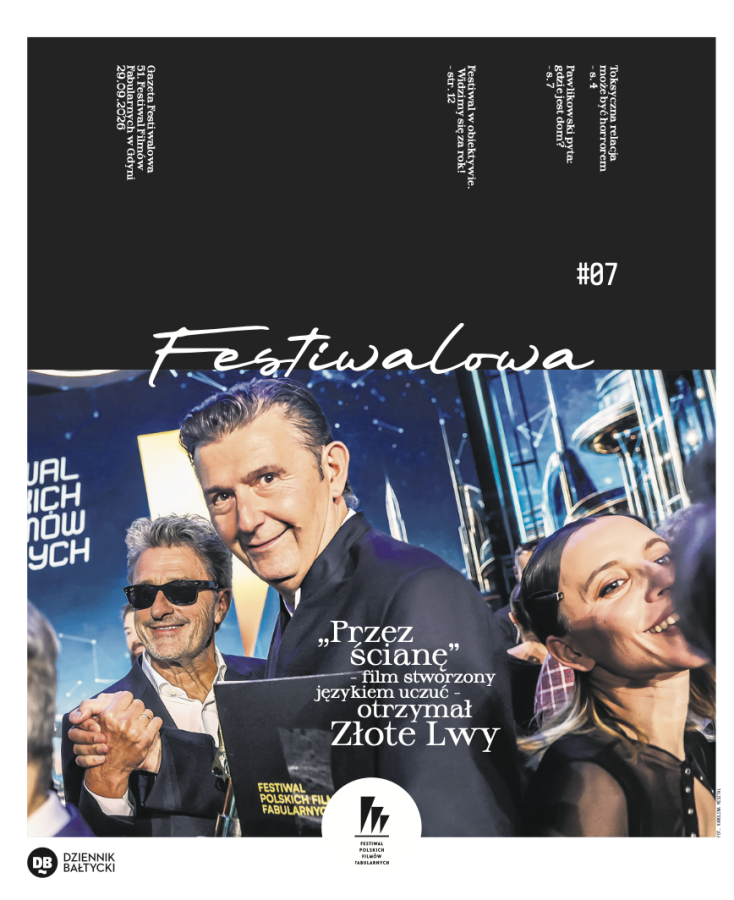 Gazeta Festiwalowa numer 7
 -
 Październikowe odsłony „50 na 51”
 -
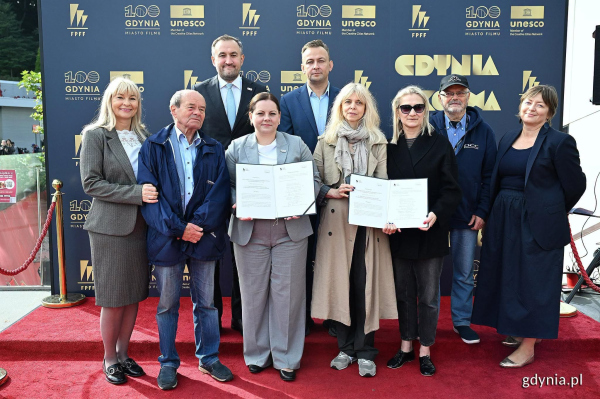 Srebrny Festiwal. FPFF dla osób starszych
 -
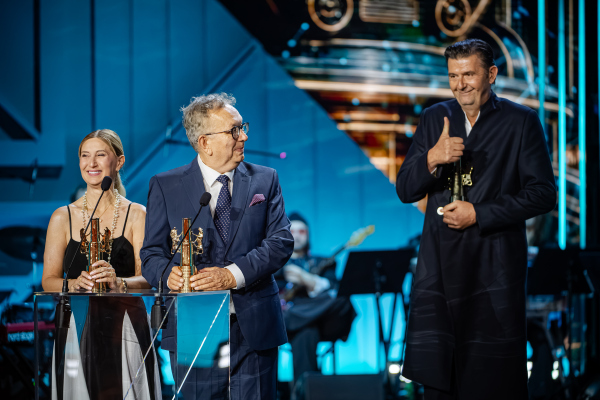 Closing Gala of the 51st Polish Film Festival – photo report
 -
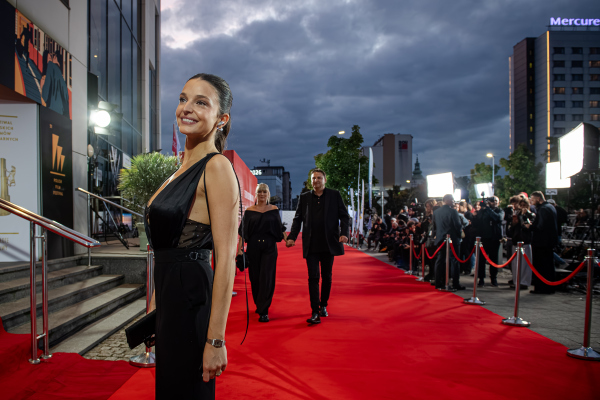 RED CARPET – photo report
 -
 Day six of the 51st PFF – photo report
 -
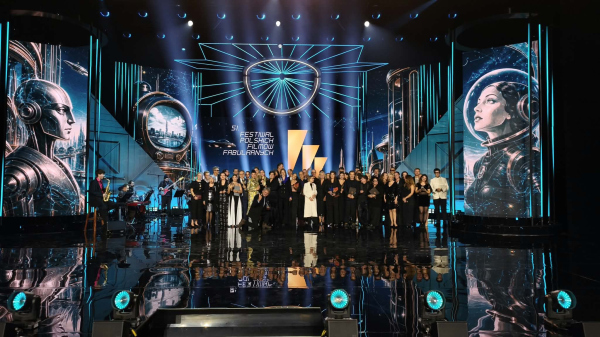 WINNERS OF THE 51ST PFF
 -
 What’s in store for today? SATURDAY
 -
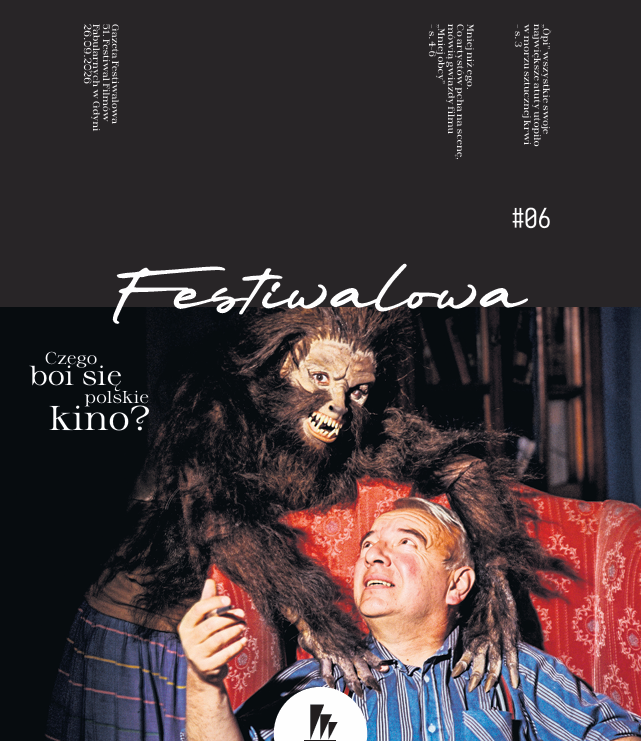 Festival Newspaper No 6
 -
 51st PFF Newsreel - Episode 5
 -
 Horror lies underneath
 -
 The Apostles of Rock’n’Roll.
 -
 Notions of Intertextuality in the Cinema of Krzysztof Kieślowski
 -
 The architects of chaos. How do women backstage at the PFF save the celebration...
 -
 YOUNG GALA – photo report
 -
 Day five of the 51st PFF – a photo report on festival life and accompanying...


