
– The archive also contained a whole host of other artefacts: tens of thousands of photographs, diaries, press cuttings, film awards, objects, hard drives and tape recordings in various formats. There was so much of it that I needed several trips by car to transport it all – says Marcin Borchardt, director of the film Magic Hour, which was based on Piotr Sobociński’s private home videos.
Radosław Czyż
Radosław Czyż: How did the Sobociński story come your way?
Marcin Borchardt: I got a phone call with a proposal. I get them from time to time; usually nothing comes of them. This time, I decided to meet with Basia Ławska, the production manager at the Feature and Documentary Film Studio, and Andy Chojecki, a producer who has lived in Los Angeles for many years and was a friend of Piotr Sobociński. I wanted to have a chat because the magic words had been mentioned: a family archive of film and video tapes.
That piqued my interest. I wanted to find out exactly what was in this archive. However, when someone says, ‘a film about the Sobocińskis’, the question immediately arises as to what sort of film it’s going to be and what it’s going to be about. After all, Witek, Piotr and their work are closely linked to the history of Polish cinema. It’s a legacy of fundamental importance. How should one approach this?
Typical biographical stories don’t interest me at all as a filmmaker. A story about a career, successive projects or a single exceptional film doesn’t give me what I value most in a documentary: a certain cinematic stake, a challenge.
Were there many of these tapes?
It turned out, however, that the family archive is enormous. Piotrek and Witek spent many years filming themselves and various situations. The oldest recordings, shot on 8 mm film, date from the late 1940s and early 1950s. Later, digital video came along, and not only Witek but also Piotr and other family members began filming. The camera simply did the rounds of the house.
In total, there were around 250 hours of footage, mainly of a very private nature. However, there are also items of significance from the perspective of the history of cinema: recordings from film sets, including Pharaoh, later Kieślowski’s films, and Hollywood productions on which Piotr worked in the 1990s.
The archive also contained a whole host of other artefacts: tens of thousands of photographs, diaries, press cuttings, film awards, objects, hard drives and tape recordings in various formats. There was so much of it that I needed several trips by car to transport it all.
How long did it take just to organise the material?
For me, the first stage – which I call ‘documentation’ – is extremely important and usually takes quite a long time. It’s a massive job. Not only do you have to familiarise yourself with the existing material, which is usually completely unorganised and simply a mess. You also have to understand what you’re dealing with, enter the world of the characters and consider whether there’s any cinematic potential there at all.
Working on this film is like putting together a picture made up of a million jigsaw pieces that are scattered about and don’t form a whole in any logical way. After all, the material wasn’t created with the intention of turning it into a film. And this is where a huge problem arises: am I investing my work and time in something that can later even be translated into a story we’ll see on screen?
And how did a story begin to emerge from those 250 hours?
I realised quite quickly that I was more interested in Piotr than in Witek. I felt closer to him because of his sensitivity – both artistic and on the level of pure empathy. Because of his gentleness, his interesting perspective on the world, and his view of what work is.
At the same time, I was very interested in the dynamics of the father–son relationship. Witek Sobociński was a very strong, domineering figure, and Piotrek had to grapple with that. He had to come to terms with this family situation somehow, which is something I also talk about in the film.
There’s a scene in which Witold and Piotr receive awards at the same Camerimage gala, and the question arises of the father’s jealousy towards his son.
I could have said more about it, but I didn’t want to expand on that thread because this isn’t primarily a film about their relationship. I’ve already made a film about a father and son, The Beksińskis: A Videophonic Album.
Here, the father-son relationship is very important, but this film is about something else. The moment you’re referring to is the one in which my protagonist, Piotr, breaks free from the burden of his father, with all its consequences – both positive and negative.
The positives are obvious: learning the trade, entering this world, a certain cultural capital that cannot be overestimated. On the other hand, there was enormous pressure, because Witek was a man who was very critical of his closest family – both towards Piotr and, later, towards his grandchildren.
-
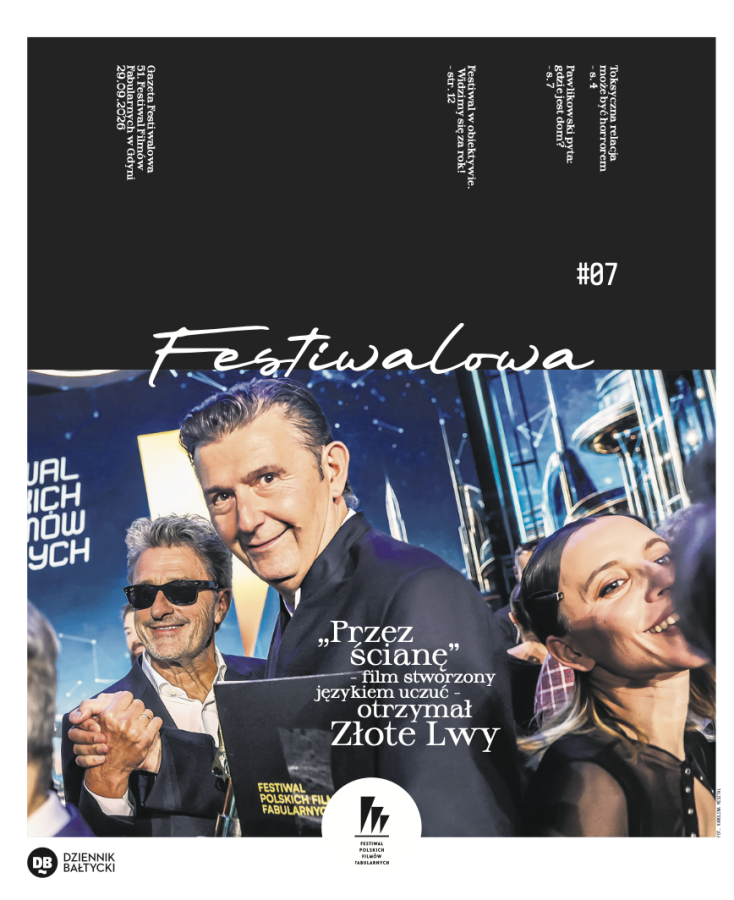 Gazeta Festiwalowa numer 7
 -
 Październikowe odsłony „50 na 51”
 -
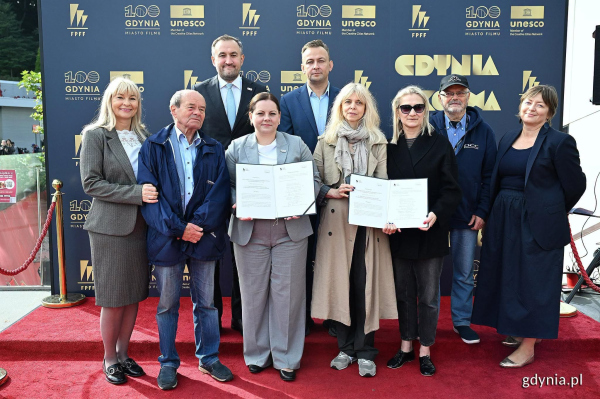 Srebrny Festiwal. FPFF dla osób starszych
 -
 Closing Gala of the 51st Polish Film Festival – photo report
 -
 RED CARPET – photo report
 -
 Day six of the 51st PFF – photo report
 -
 WINNERS OF THE 51ST PFF
 -
 What’s in store for today? SATURDAY
 -
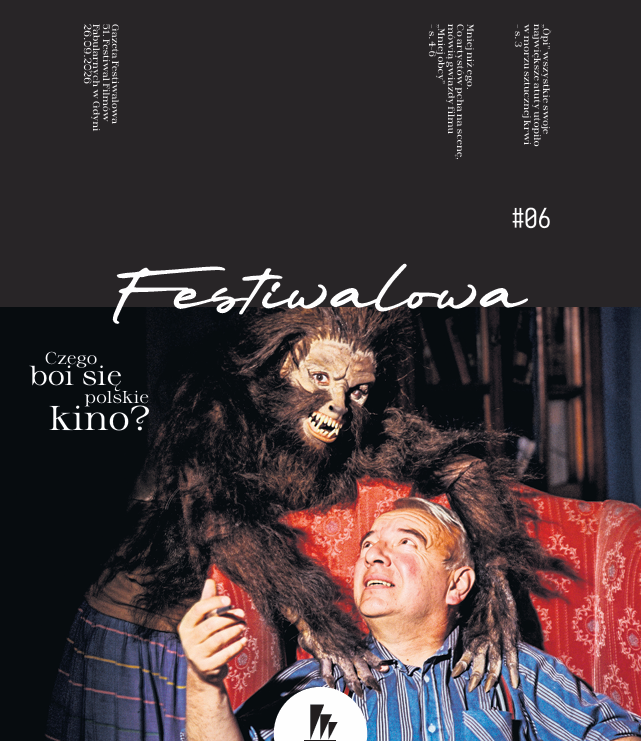 Festival Newspaper No 6
 -
 51st PFF Newsreel - Episode 5
 -
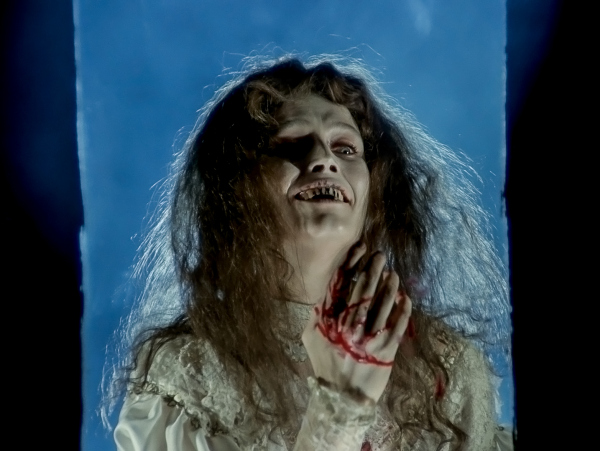 Horror lies underneath
 -
 The Apostles of Rock’n’Roll.
 -
 Notions of Intertextuality in the Cinema of Krzysztof Kieślowski
 -
 The architects of chaos. How do women backstage at the PFF save the celebration...
 -
 YOUNG GALA – photo report
 -
 Day five of the 51st PFF – a photo report on festival life and accompanying...


