

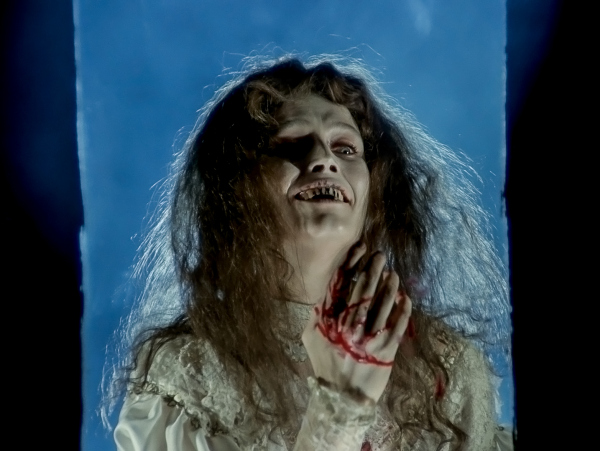
The film tells the story of an encounter between the spirit of a possessed girl, trapped for centuries inside a stone, and my 102-year-old grandmother, who is waiting to die in her room. The spirit, linked to a folk tale about a mysterious stone from Kontrewers village, begins to draw closer to the devout elderly woman, mistaking her for her long-lost mother.
Work on the film Kontrewers began with a fascination with how stories, and personal and collective traumas, are repressed, covered up, deemed resolved, and then return in a completely different form. Often not in words, but in gestures, bodily reactions, objects, and matter.
That is why I became so interested in the story of the stone from Kontrewers. The stone was discovered by chance, caused a huge controversy because of the Neolithic petroglyphs carved into its surface, and was then reburied. But it did not remain hidden for long. It was precisely this process – its appearance, disappearance and reappearance – that I found most fascinating. Something is buried, yet it does not disappear completely. It endures and waits for the right conditions in which it can emerge once more.
During my research, I also came across a folk tale about possession linked to the same stone. I became interested in the phenomenon of possession not as a pathology, but as a form of relationship with that which lies beyond directly accessible reality. Before it was completely subsumed by the Christian language of sin, illness and purification, possession could be understood as a means of communicating with something Other – with unknown forces, with memory, with the dead, with something that cannot quite be named.
So I began to think of possession not as something that needs to be ‘cured’ or cleansed, but as a way of co-existing. A situation in which two beings can find themselves in one body and, for a time, need not exclude one another.
In theory, this made sense, but how could it be understood in practice? I began to look for an example of endurance, of co-existence with layered memories and emotions. And that is how my grandmother, who was 102 at the time, became part of the project.
-
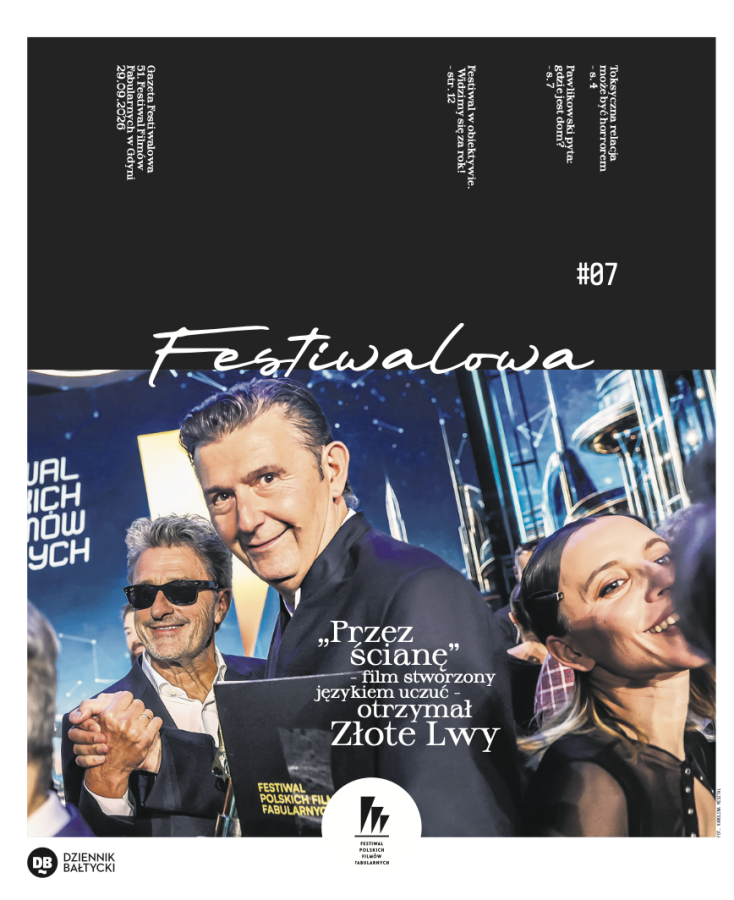 Gazeta Festiwalowa numer 7
 -
 Październikowe odsłony „50 na 51”
 -
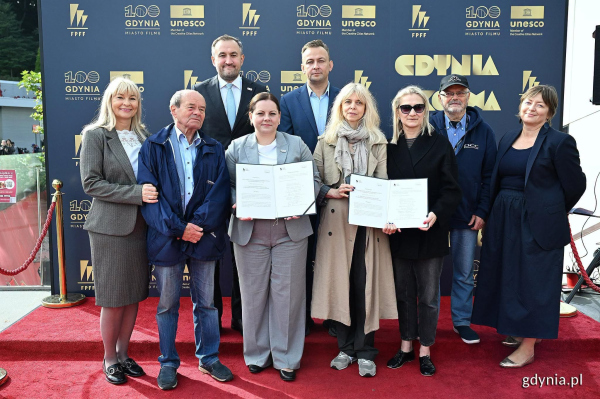 Srebrny Festiwal. FPFF dla osób starszych
 -
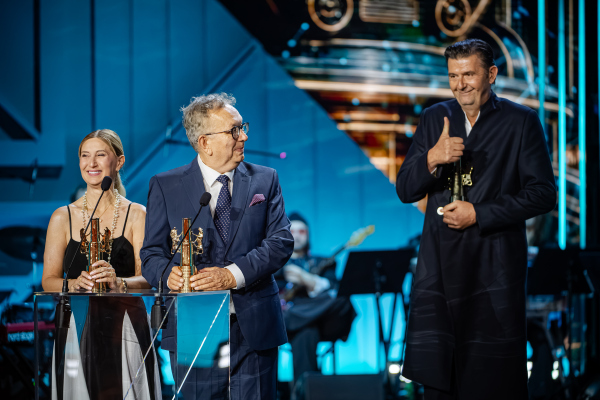 Closing Gala of the 51st Polish Film Festival – photo report
 -
 RED CARPET – photo report
 -
 Day six of the 51st PFF – photo report
 -
 WINNERS OF THE 51ST PFF
 -
 What’s in store for today? SATURDAY
 -
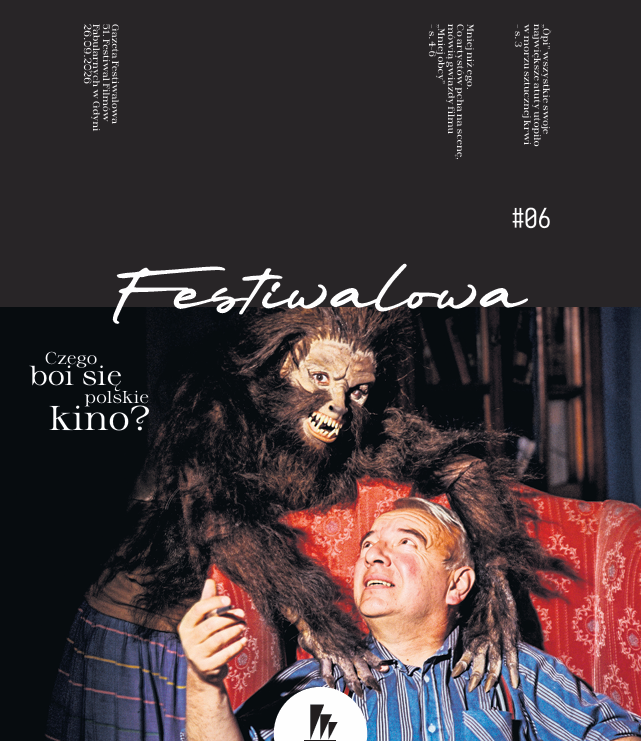 Festival Newspaper No 6
 -
 51st PFF Newsreel - Episode 5
 -
 Horror lies underneath
 -
 The Apostles of Rock’n’Roll.
 -
 Notions of Intertextuality in the Cinema of Krzysztof Kieślowski
 -
 The architects of chaos. How do women backstage at the PFF save the celebration...
 -
 YOUNG GALA – photo report
 -
 Day five of the 51st PFF – a photo report on festival life and accompanying...


