
Natalia Barczak
The 51st edition of the FPFF combines tradition with a breath of modernity. Conversations overheard in the cinema corridors range from the works of Andrzej Wajda and Krzysztof Kieślowski to the films of Jan Komasa. In the unique setting of a film festival, these debates take on a more professional and specialised character. The festival becomes a breeding ground for discussions on the state of national cinema.
The festival’s guests and visitors differ in their views on Polish cinema. And it might seem quite obvious, after all, we all have different tastes. The well-known saying ‘There’s no accounting for taste’ implies that subjective matters must remain in the private sphere. This results in a failure to confront differing opinions. The assumption that an exchange of views and opinions can only do harm is mistaken. Based on a broad and multifaceted discussion, the conclusions drawn from it become constructive and necessary.
There is no doubt that a paradox arises – a contradiction between etiquette and the exchange of views. Polish cinema, a niche genre that is, on the one hand, readily criticised and, on the other, excessively and uncritically adored, is a polarising element in public debate. How can one comment on a film without in any way offending its creators or audience? How can one hold a discussion about changes in Polish cinema when certain models and iconic figures are so deeply entrenched? The answer lies in the word ‘canon’.
According to the definition in the PWN Dictionary, it means ‘a set of patterns, rules and production methods in force during a given period with regard to the depiction of the human figure, architectural style or any artistic forms in a specific area’. Consequently, if we apply the above explanation to the field of cinema, a certain contradiction comes to mind. A concept associated with religion and spirituality touches upon the mundane sphere. In terms of the criteria defining the canon, cinematic highlights will be understood as the creation of a list of almost sacred titles, absolute must-sees.
At the same time, however, we also suffer from an almost hysterical fear of remakes of classics, seen as a violation of the supposed sanctity of the original. However, the more Polish filmmakers experiment with film genres and step outside the confines of safe productions (most often dramas, biopics and gangster films), the more open-minded audiences become, pushing beyond their own comfort zones. Consequently, they first challenge and then overturn the established canon.
The new generation has no need to look to iconic works. Instead of, say, nostalgic trips back to the People’s Republic of Poland, they need different stories with which they can identify.
I asked the festival audience what they thought of the films in the competition. For Ms Anna from Wejherowo, coming to the festival in Gdynia is a family tradition. She considered Jan Holoubek’s Wild, Wild East to be the best film she had seen so far this year.
She preferred to keep quiet about the festival’s disappointments, which contrasts with the comments made by Mr Łukasz from Wrocław. He had no hesitation in singling out Sonja Orlewicz–Zakrzewska’s Exotic as a pleasant cinematic surprise, whilst Agnieszka Smoczyńska’s Hot Spot was a film he would not choose to watch again. What are his expectations of the films in the competition?
– The most important thing for me is to have a good time in the cinema and for the film to stay with me – he says.
Ms Stanisława from Nakło nad Notecią described Paweł Pawlikowski’s Fatherland as an outstanding film, and for her, the most important thing at the festival is discovering ‘hidden gems’. She is equally enthusiastic about the opportunity to watch restored films, at the Telewizja Polska marquee, including works by Andrzej Wajda.
Ms Monika from Warsaw counts Piotr Domalewski’s Our Revolution amongst the films that are special and worth remembering, describing it as a “beautiful love story set against the backdrop of the difficult times of communism”, whilst she describes Marta Giec’s controversial Òpi as an interesting and unconventional film. She came to the festival to watch preview screenings of films by her favourite directors and to see the actors up close.
Mr Tomasz from Gdańsk says his visit to the festival is driven by a great passion for cinema, particularly Polish cinema. He singles out Paweł Pawlikowski’s Fatherland and Karolina Bielawska’s Violetta Villas as productions particularly worth watching. Mr Maciej from Reda counts Wild, Wild East and Janusz Zaorski’s Picasso’s Mermaid amongst his favourite films. What are his expectations for the festival?
– I want to come away with some positive memories of the film.
Many other participants also considered the films by Paweł Pawlikowski, Jan Holoubek and Sonja Orlewicz–Zakrzewska to be the best and most interesting. Is this how the new canon of Polish cinema is being established?
-
 Wątki ucięte, jak głowy. O filmie „ÒPI”.
 -
 Zuza Banasińska o swoim filmie „Kontrewers”
 -
 What’s in store for today? SATURDAY
 -
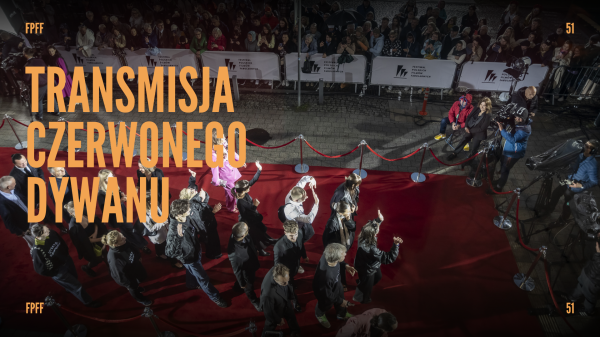 Red Carpet Broadcast
 -
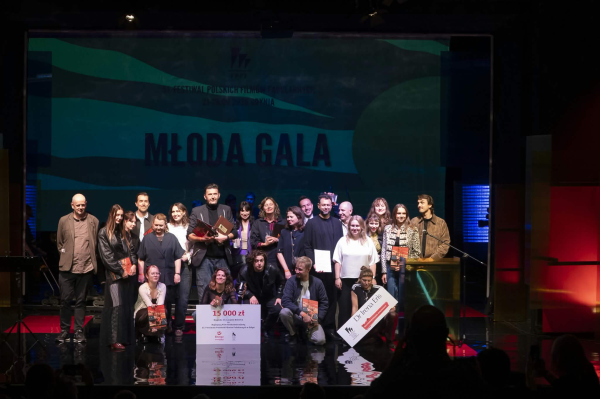 YOUNG GALA | THE WINNERS OF THE 51ST PFF
 -
 What’s in store for today? FRIDAY
 -
 Pracoholizm i niewyspanie
 -
 Życie na bok, teraz robię napad – rozmowa z Jaśminą Polak
 -
 Documentary as Historical Recordkeeping: Kieślowski's Early Approach to...
 -
 Kino dla wszystkich
 -
 Spółdzielnio, nie eksmitujcie fabuły!
 -
 Jan Bujnowski o swoim filmie „Złe pomysły”
 -
 Faceless State and Collective Soul: From Kieślowski's Documentary Shorts to the...
 -
 Broadcast of the Young Gala
 -
 Day four of the 51st PFF – photo report: Gdynia Industry and accompanying...
 -
 Day four of the 51st PFF – photo report from the festival and out-of-competition...


